

Save these numbers on your phone before you travel. In an emergency in Belgrade or elsewhere in Serbia, you can call the national services directly, and operators in the capital often handle calls in English, though you should be ready to give your location slowly and clearly.
Key numbers
| Service | Number |
|---|---|
| Police | 192 |
| Fire service | 193 |
| Ambulance | 194 |
| General emergency (EU-style single number) | 112, listed by some travel sources; the three numbers above are the standard ones |
| Roadside assistance (AMSS) | 1987 |
If you call from a mobile phone and the call does not connect, you may need to add the Belgrade area code, 011. Numbers can change, so confirm them with your accommodation or an official source.
What to say when you call
- Say where you are first: street name and number, or a nearby landmark.
- Say what happened and how many people need help.
- Give your name and a phone number, and do not hang up until the operator tells you to.
Other useful contacts
- Your embassy. Keep the address and phone number of your country’s embassy in Belgrade. They can help with lost passports and serious incidents.
- Your insurer. Many travel insurers run a 24-hour assistance line. Save it, and keep your policy number handy.
- Your accommodation. Hotel and hostel staff can call a doctor or taxi for you and explain how to get to the nearest clinic.
Medical help
Foreign citizens have the right to emergency medical assistance during a temporary stay in Serbia, and how costs are handled depends on your country and your insurance. See our guides to healthcare in Belgrade for expats and private clinics, and read about English-speaking doctors and pharmacies.
Frequently asked questions
Will the operator speak English? Often, but not always. Keep your sentences short and give an address in Latin letters.
What if I lose my phone? Ask a hotel, shop or passerby to call for you, and report the loss to the police.
Emergency numbers and procedures can change, so confirm them from an official source. See how we create our content, including our use of AI.
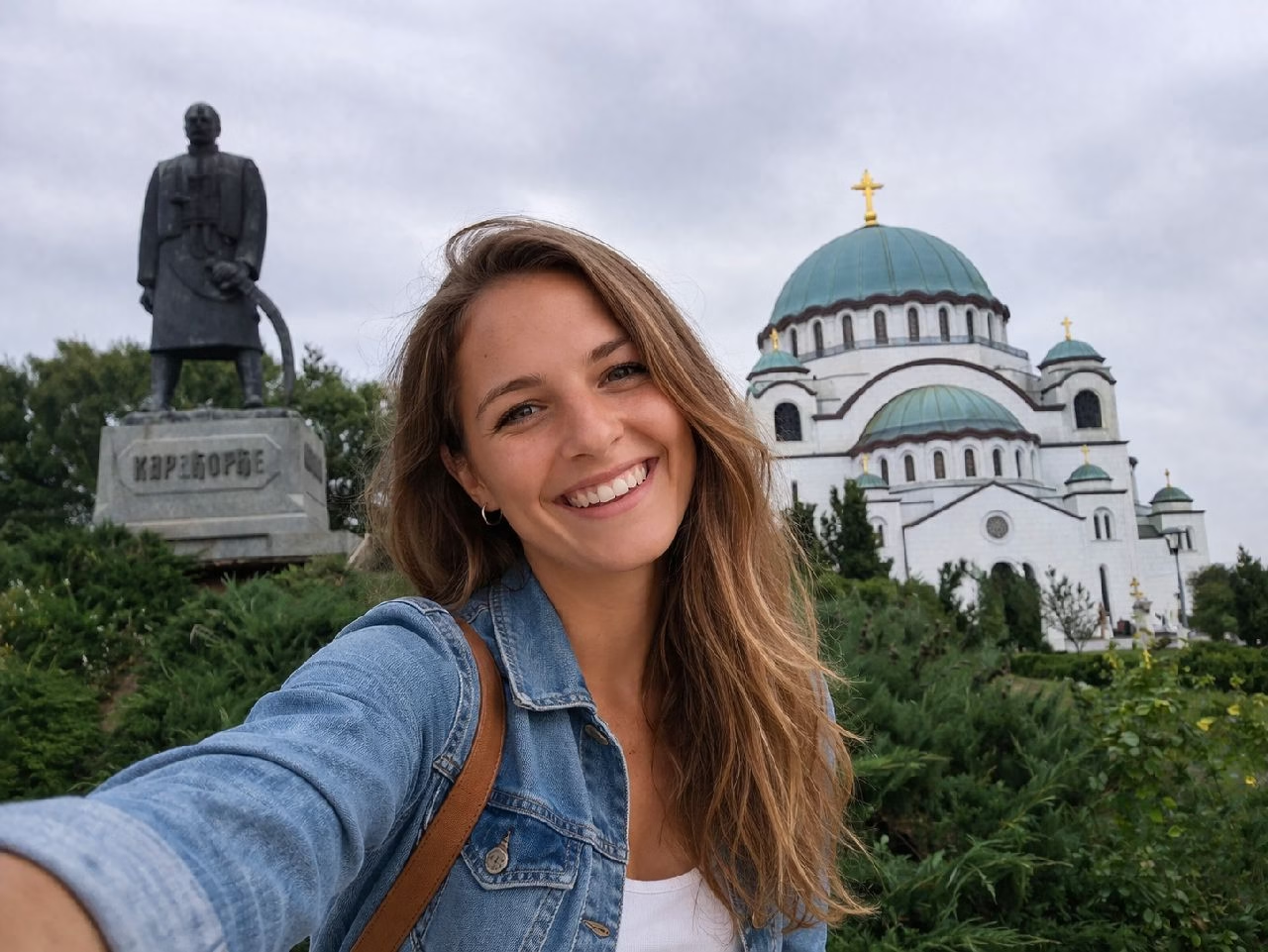
I’m Nevena, a writer and Belgrade native who now splits my time between Serbia and the UK. I’ve been living between two countries for 8 years, which means I understand Belgrade from both sides: as someone who grew up here, and as someone who had to rediscover it through expat eyes.
That dual perspective shapes everything I write. I cover expat life in Belgrade in depth, the things no guidebook tells you, like how to navigate the healthcare system, where to find reliable childcare, what property buying actually involves for foreigners, and how much things really cost when you live here rather than just visiting. I’ve done most of this myself, which means my guides are based on real experience, not research from a distance.
I also write about Serbia and the wider Balkans as a travel destination, a region that still surprises people with how much it offers. I’ve taken 35+ solo trips across Serbia, Bosnia & Herzegovina, North Macedonia, Montenegro, Croatia and Romania, and I speak Serbian, English and conversational Romanian.
Belgrade is one of Europe’s most underrated cities, and I’ve made it my mission to change that, one honest, practical guide at a time.