

Foreigners who want to live in Belgrade for more than a short visit need a residence permit. The main routes are temporary residence, which is tied to a purpose such as work, study, family or property, and permanent residence after several years. Serbian immigration rules and fees change, so use this guide to understand the system and confirm every requirement with the authorities.
Visit First, Then Residence
Many nationalities can enter Serbia without a visa and stay for a limited period, which is covered in our guides on whether you need a visa for Serbia and how long you can stay visa-free. A visa-free stay is not residence and does not allow you to work. If you plan to live or work in Serbia, you need to arrange a permit for the right purpose.
Temporary Residence
Temporary residence is granted for a specific purpose. Common grounds include:
- Work or employment: The residence permit for work is linked to a job and an employer. In recent years Serbia has moved to a combined procedure for residence and work permission, so check with the authorities how it applies to you. See our work permit guide.
- Study: Requires acceptance at a recognised institution.
- Family reunification: For spouses, children and other close family of Serbian citizens or foreigners with residence.
- Other grounds: These include business activity, property ownership, volunteering and humanitarian reasons. The requirements are specific to each ground. Owning property or running a company does not by itself guarantee a permit.
Temporary residence is granted for a limited period, generally up to one year at a time, and can be extended. The exact period depends on the ground and on the length of the underlying document, such as a work contract or enrolment confirmation.
Documents You Usually Need
| Document | Notes |
|---|---|
| Valid passport | Check the validity period the authorities require beyond your stay. |
| Application form and photo | Submitted to the Ministry of the Interior, with proof of payment of the administrative fees. |
| Proof of purpose | Employment contract, enrolment letter, marriage certificate or other documents for your ground. |
| Proof of accommodation | For example, a rental contract or ownership proof. |
| Health insurance and proof of funds | Required for many grounds. Requirements differ by permit type. |
| Criminal record certificate | Often required, along with apostilles and certified Serbian translations for foreign documents. |
Foreign documents generally need an apostille or legalisation and a translation by a court-certified translator in Serbia, which can take longer than the application itself. Ask the police administration or a lawyer for the current checklist for your permit type.
Where and How to Apply
Applications for temporary residence are normally submitted to the police administration of the Ministry of the Interior in the area where you will live, which in Belgrade means the Foreigners’ Department. Some applicants first have to apply through a Serbian embassy or consulate in their home country, depending on nationality and ground. The official portal welcometoserbia.gov.rs and the Ministry of the Interior (mup.gov.rs) publish current information in English. Many expats use a local lawyer or agency for the first application, because forms and procedures are in Serbian.
Fees and processing times change and depend on the permit type, so I do not quote figures here. Official fees are set in Serbian dinars, and processing can take weeks to a couple of months. Ask the authorities for the current fee and timeline, and plan your travel around possible delays.
Reporting Your Address
All foreigners staying in Serbia must have their address registered with the police. In hotels this is done by the hotel, and in private accommodation the host or landlord must register you, generally within 24 hours of your arrival. Keep the registration slip, because you may need it for later applications. See our bureaucracy guide for more.
Permanent Residence
Permanent residence is generally available after a period of continuous legal temporary residence, commonly five years. Shorter periods apply in some family cases, such as spouses of Serbian citizens. Periods of absence from Serbia can interrupt continuity, and you will need to show the right to stay, funds and accommodation. Serbia does not run a general residence-by-investment scheme, so be cautious about agents who promise one. More detail is in our permanent residency guide.
What Residence Does and Does Not Give You
- It lets you live in Serbia for the permitted period and lets you open a bank account and sign contracts. See our banking guide.
- Work rights depend on the permit. A permit for study or family reasons does not automatically allow any job.
- Access to the public healthcare system depends on your status and on paying contributions. See our healthcare guide.
- A Serbian residence permit does not give you the right to live or stay in the Schengen Area. Your right to travel to other countries depends on your passport, so check each country’s entry rules.
Common Problems
- Incomplete documents, or documents without an apostille or certified translation.
- Letting a permit expire before applying for an extension. Apply well before the deadline.
- Not reporting changes such as a new address or a new employer.
- Relying on agents who promise guaranteed approval. A reputable lawyer will not.
Tax residence is separate from immigration status, so read our expat taxes guide as well.
Official Resources
- Ministry of the Interior: mup.gov.rs
- Ministry of Foreign Affairs: mfa.gov.rs
- Welcome to Serbia portal: welcometoserbia.gov.rs
- Your own country’s embassy in Belgrade, for documents and notarisation questions
Frequently Asked Questions
Can I work in Serbia on a tourist stay?
No. You need work permission or a permit that allows work.
How long until I can apply for permanent residence?
Generally after about five years of continuous temporary residence, with shorter periods in some family cases. Confirm the current rules.
Does owning property in Serbia give me residence?
Not automatically. Property can be used as proof of accommodation or as one of the grounds for a temporary permit in some cases, but you must meet the requirements for that ground.
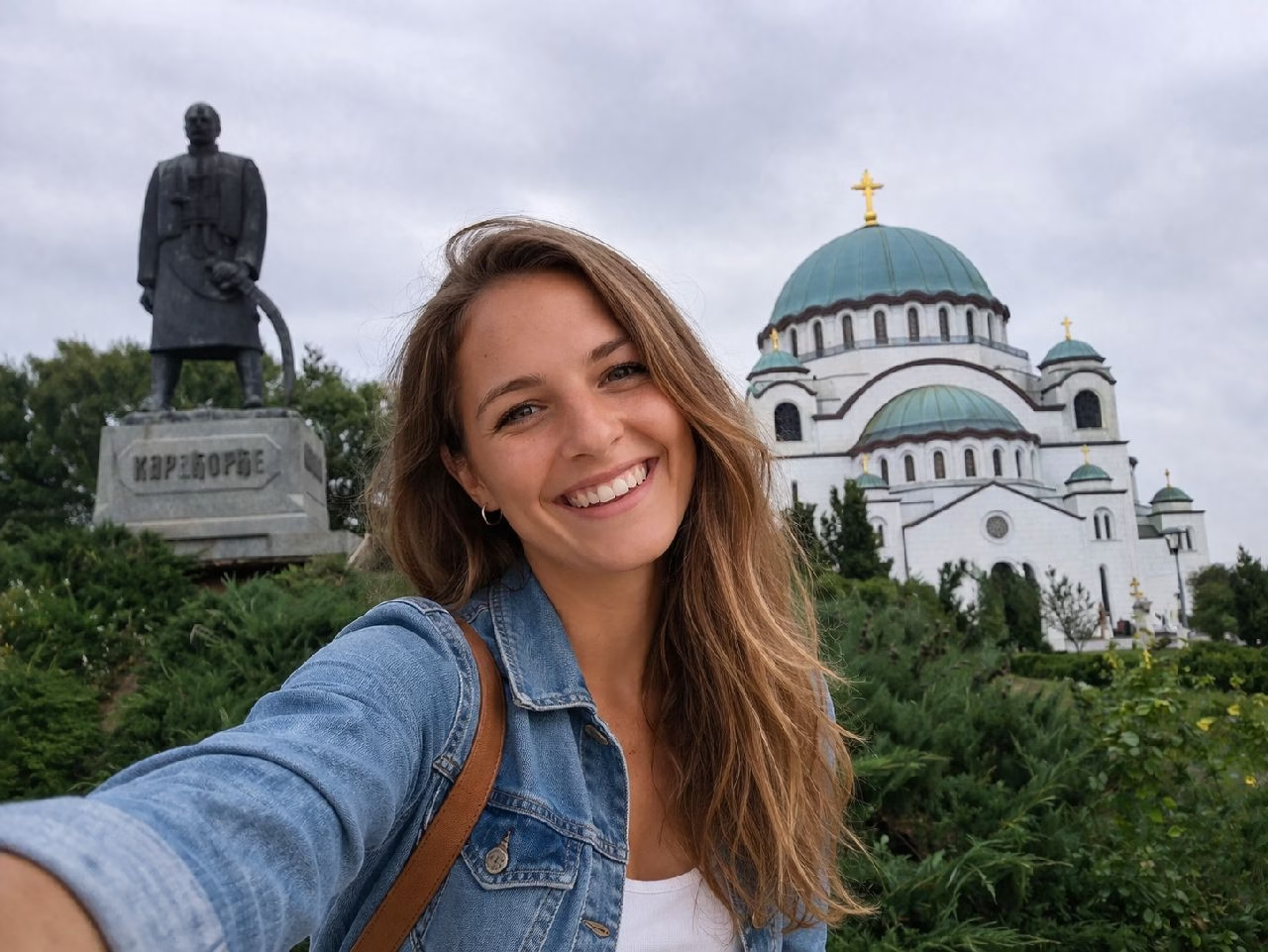
I’m Nevena, a writer and Belgrade native who now splits my time between Serbia and the UK. I’ve been living between two countries for 8 years, which means I understand Belgrade from both sides: as someone who grew up here, and as someone who had to rediscover it through expat eyes.
That dual perspective shapes everything I write. I cover expat life in Belgrade in depth, the things no guidebook tells you, like how to navigate the healthcare system, where to find reliable childcare, what property buying actually involves for foreigners, and how much things really cost when you live here rather than just visiting. I’ve done most of this myself, which means my guides are based on real experience, not research from a distance.
I also write about Serbia and the wider Balkans as a travel destination, a region that still surprises people with how much it offers. I’ve taken 35+ solo trips across Serbia, Bosnia & Herzegovina, North Macedonia, Montenegro, Croatia and Romania, and I speak Serbian, English and conversational Romanian.
Belgrade is one of Europe’s most underrated cities, and I’ve made it my mission to change that, one honest, practical guide at a time.