
This guide will help you understand how long you can stay in Serbia without a visa, depending on your nationality. Serbia allows certain nationalities to enter the country and stay for a specific duration without requiring a visa. Understanding these rules can assist you in planning your travel effectively.
If you are a citizen of the European Union, you can stay in Serbia visa-free for up to 90 days within a 180-day period. This rule applies equally to citizens from the European Economic Area, which includes Norway, Iceland, and Liechtenstein, as well as Switzerland.
Citizens from many countries outside of the EU also enjoy visa-free access. For instance, United States, Canada, Australia, and New Zealand passport holders can enter Serbia without a visa and remain for up to 90 days. Similarly, nationals from countries such as Japan, South Korea, and Israel also benefit from this arrangement.
It’s important to check specific conditions pertaining to your homeland, as the rules can vary significantly. Some countries have shorter visa-free durations; for example, passport holders from Turkey can stay for a maximum of 90 days within a 180-day period. Conversely, travelers from Russia can remain in Serbia visa-free for up to 30 days.
For those planning to stay longer than the allotted visa-free days, a visa will be necessary. You can apply for a temporary visa or a long-term visa at a Serbian embassy or consulate. Make sure to begin the application process well in advance of your travel dates to avoid any last-minute issues.
It is also vital to keep track of your entry and exit dates. Overstaying your visa-free period can lead to fines and complications for future travel to Serbia or other Schengen Zone countries.
If you wish to engage in activities other than tourism during your stay, such as work or studying, you must obtain the appropriate visa prior to your arrival. Serbia offers various types of visas for different purposes, so ensure you select the right one based on your plans.
Lastly, while the Serbian government generally updates its visa policies, always check the official government website or consult with the nearest embassy for the most current information before you travel. This ensures you meet all entry requirements and avoid any problems upon arrival in Serbia.
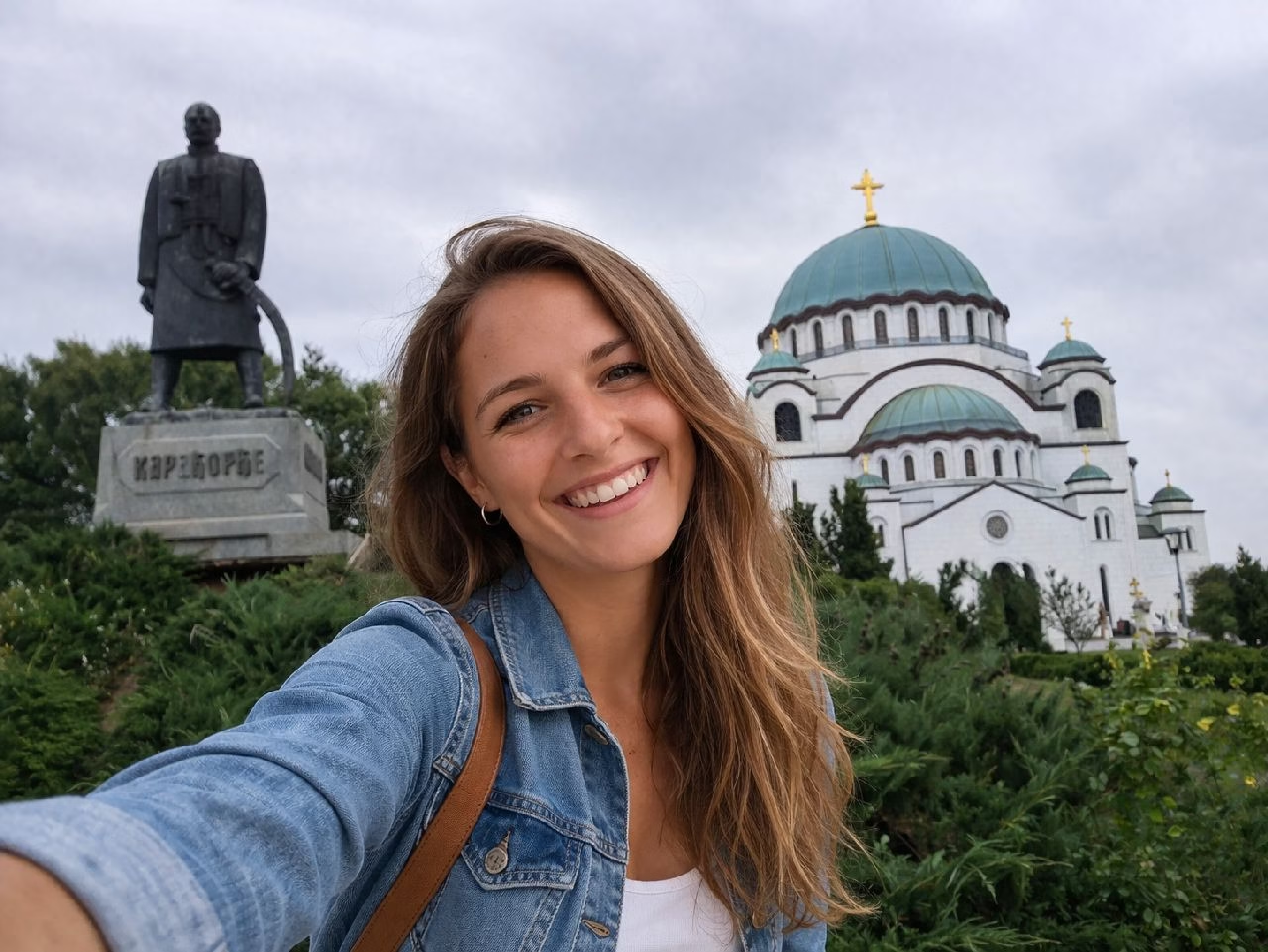
I’m Nevena, a writer and Belgrade native who now splits my time between Serbia and the UK. I’ve been living between two countries for 8 years, which means I understand Belgrade from both sides: as someone who grew up here, and as someone who had to rediscover it through expat eyes.
That dual perspective shapes everything I write. I cover expat life in Belgrade in depth, the things no guidebook tells you, like how to navigate the healthcare system, where to find reliable childcare, what property buying actually involves for foreigners, and how much things really cost when you live here rather than just visiting. I’ve done most of this myself, which means my guides are based on real experience, not research from a distance.
I also write about Serbia and the wider Balkans as a travel destination, a region that still surprises people with how much it offers. I’ve taken 35+ solo trips across Serbia, Bosnia & Herzegovina, North Macedonia, Montenegro, Croatia and Romania, and I speak Serbian, English and conversational Romanian.
Belgrade is one of Europe’s most underrated cities, and I’ve made it my mission to change that, one honest, practical guide at a time.