
Belgrade, the capital of Serbia, is a vibrant and diverse city with a rich history and a unique language. Serbian is the official language of Belgrade, and it is spoken by the majority of the population. The language is part of the South Slavic branch of the Slavic languages and is closely related to Croatian and Bosnian. Serbian uses the Cyrillic alphabet, which can be a challenge for English speakers to learn, but many signs and public information are also available in Latin script. The language has a complex grammar system and a rich vocabulary, making it an interesting and rewarding language to learn.
Belgrade is a city that is open to visitors from all over the world, and English is widely spoken, especially in tourist areas and among younger generations. However, it is always appreciated when visitors make an effort to learn a few basic phrases in Serbian, as it shows respect for the local culture and can help to facilitate communication. Learning some common greetings and expressions in Serbian can go a long way in making a positive impression on the people of Belgrade.
Common Greetings and Expressions in Belgrade
When visiting Belgrade, it is important to know some common greetings and expressions in Serbian. “Dobar dan” (DOH-bahr dahn) means “good day” and is used as a general greeting during the day. “Dobro jutro” (DOH-broh YOO-troh) means “good morning” and is used in the morning until around noon. “Dobra večer” (DOH-brah VEH-chehr) means “good evening” and is used in the evening. “Hvala” (HVAH-lah) means “thank you” and is an important word to know when interacting with locals. “Molim” (MOH-leem) means “please” and is used when making a request or asking for something. These basic phrases can help visitors navigate daily interactions in Belgrade and show respect for the local language and culture.
In addition to greetings, it can be helpful to know some basic expressions for getting around the city. “Gde je…” (gdeh yeh) means “where is…” and can be followed by the name of a place or landmark. For example, “Gde je autobuska stanica?” means “Where is the bus station?” “Koliko košta?” (KOH-lee-koh KOSH-tah) means “how much does it cost?” and is useful for shopping or dining out. Learning these basic phrases can make navigating Belgrade much easier and can help visitors feel more comfortable in their surroundings.
Polite Phrases and Etiquette in Belgrade
In addition to common greetings and expressions, it is important to be aware of polite phrases and etiquette when interacting with people in Belgrade. “Molim vas” (MOH-leem vahs) means “please” and is a polite way to make a request or ask for something. Using this phrase shows respect for the person you are speaking to and can help to create a positive interaction. “Izvinite” (eez-VEE-nee-teh) means “excuse me” and can be used to get someone’s attention or to apologize for bumping into someone. “Izvolite” (eez-VOH-lee-teh) means “here you go” or “go ahead” and is used when offering something to someone or letting them go first.
When interacting with people in Belgrade, it is important to be polite and respectful. Using these polite phrases can help to create a positive impression and show that you are considerate of local customs and etiquette. It is also important to remember that in Serbian culture, it is common to greet people with a kiss on the cheek, especially among friends and family. This may be different from what visitors are used to, but it is important to respect local customs and follow the lead of the person you are greeting.
Slang and Informal Language in Belgrade
While it is important to be familiar with polite phrases and formal language, it can also be helpful to know some slang and informal language when visiting Belgrade. Serbian slang can vary by region and age group, but there are some common expressions that are widely understood. “Ćao” (chow) is a casual way to say hello or goodbye, similar to the Italian “ciao.” “Ajde” (AI-deh) means “come on” or “let’s go” and is often used to encourage someone or express impatience. “Ludilo” (LOO-dee-loh) means “craziness” or “insanity” and is used to describe something that is exciting or wild.
In addition to slang expressions, it can be helpful to know some informal language for everyday interactions. “Majstor” (MAI-stor) means “guy” or “dude” and can be used informally when addressing someone. “Fazon” (FAH-zon) means “style” or “way of doing things” and is often used to describe something that is cool or trendy. Learning some slang and informal language can help visitors connect with locals on a more personal level and gain insight into the vibrant culture of Belgrade.
Cultural Differences in Goodbyes
In Serbian culture, there are some cultural differences in how goodbyes are expressed compared to English-speaking countries. When saying goodbye in Serbian, it is common to use the phrase “Doviđenja” (doh-VEE-jen-ya), which means “goodbye.” This phrase is more formal than “ćao” and is used in situations where you want to show respect, such as when leaving a formal gathering or saying goodbye to someone you don’t know well. When saying goodbye to friends or family, it is more common to use “Ćao” or “Zdravo” (ZDRAH-vo), which means “hello” but can also be used as a casual way of saying goodbye.
In addition to verbal goodbyes, it is also common in Serbian culture to exchange kisses on the cheek when saying goodbye to friends and family. This physical gesture of affection is an important part of Serbian culture and shows closeness and warmth between people. Visitors should be prepared for this custom when saying goodbye to locals, as it is an important part of social interaction in Belgrade.
Tips for Improving English Communication with Belgraders
While English is widely spoken in Belgrade, there are some tips for improving communication with Belgraders. First, it can be helpful to speak slowly and clearly, as this can make it easier for locals to understand you. Using simple language and avoiding slang or idiomatic expressions can also help to facilitate communication. It can also be helpful to learn some basic Serbian phrases, as this shows respect for the local language and culture.
In addition to language tips, it can be helpful to be aware of cultural differences in communication styles. In Serbian culture, people tend to be more direct and expressive in their communication, so it is important to be prepared for this when interacting with locals. It can also be helpful to be aware of nonverbal communication cues, such as body language and gestures, as these can vary across cultures.
Conclusion and Final Thoughts on Speaking English in Belgrade
In conclusion, speaking English in Belgrade can be a rewarding experience, as the city is open to visitors from all over the world. While Serbian is the official language of Belgrade, English is widely spoken, especially among younger generations and in tourist areas. However, making an effort to learn some basic Serbian phrases can show respect for the local culture and help facilitate communication.
Knowing common greetings and expressions, polite phrases and etiquette, slang and informal language, cultural differences in goodbyes, and tips for improving English communication can help visitors feel more comfortable and connected during their time in Belgrade. By being aware of these aspects of language and culture, visitors can gain a deeper understanding of the vibrant city of Belgrade and create positive interactions with locals. Overall, speaking English in Belgrade can be an enriching experience that allows visitors to connect with the people and culture of this dynamic city.
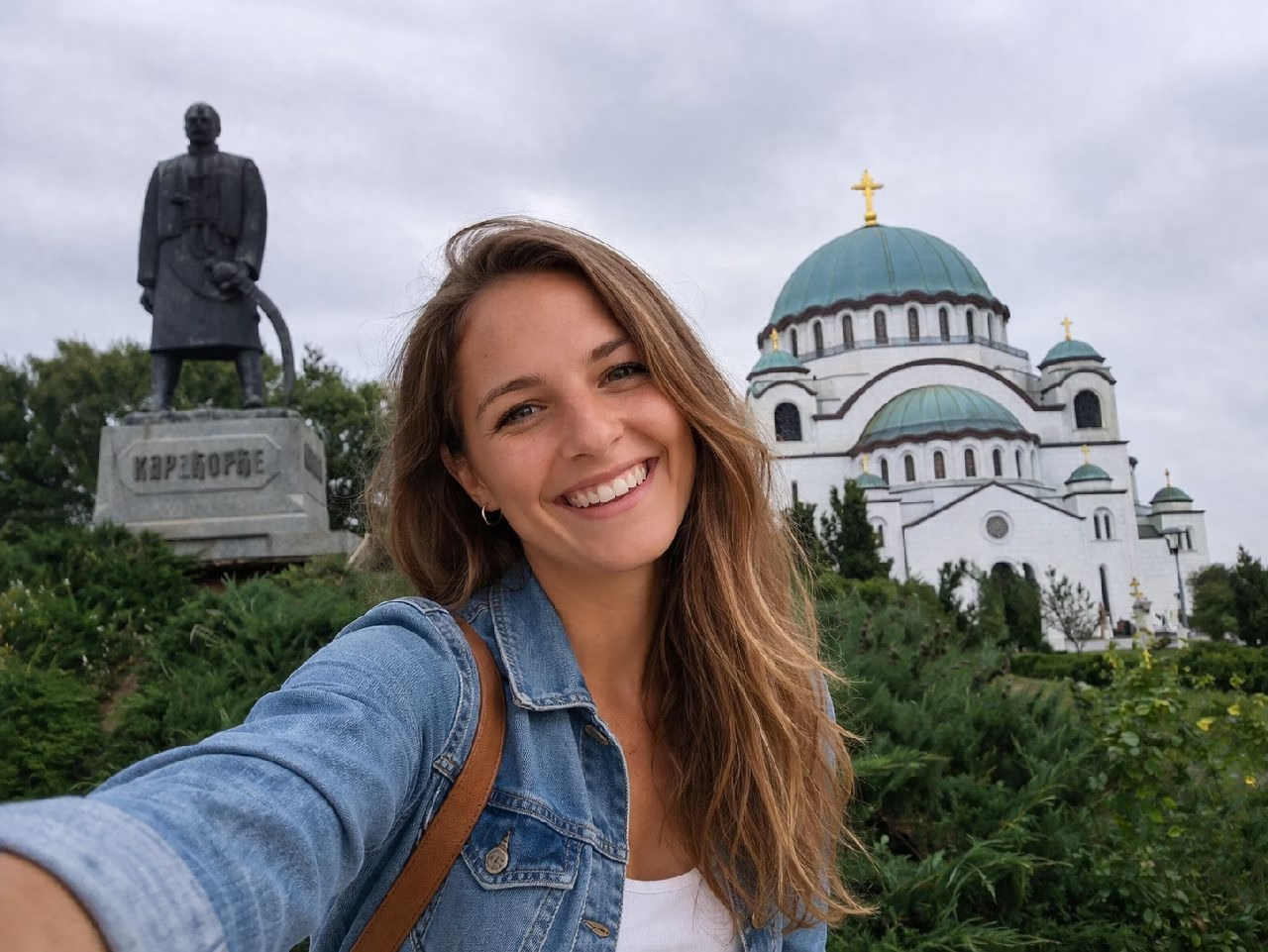
I’m Nevena, a writer and Belgrade native who now splits my time between Serbia and the UK. I’ve been living between two countries for 8 years, which means I understand Belgrade from both sides: as someone who grew up here, and as someone who had to rediscover it through expat eyes.
That dual perspective shapes everything I write. I cover expat life in Belgrade in depth, the things no guidebook tells you, like how to navigate the healthcare system, where to find reliable childcare, what property buying actually involves for foreigners, and how much things really cost when you live here rather than just visiting. I’ve done most of this myself, which means my guides are based on real experience, not research from a distance.
I also write about Serbia and the wider Balkans as a travel destination, a region that still surprises people with how much it offers. I’ve taken 35+ solo trips across Serbia, Bosnia & Herzegovina, North Macedonia, Montenegro, Croatia and Romania, and I speak Serbian, English and conversational Romanian.
Belgrade is one of Europe’s most underrated cities, and I’ve made it my mission to change that, one honest, practical guide at a time.