

Staying connected in Belgrade is easy. Most cafes, restaurants, hotels and coworking spaces offer Wi-Fi, and mobile data is affordable. Here are your options.
Free Wi-Fi
- Cafes and restaurants. Most offer Wi-Fi to customers. Ask staff for the password.
- Hotels and apartments. Usually included, but check speeds if you work remotely.
- Libraries and public spaces. Availability varies and can be unreliable.
- Coworking spaces. Fast and reliable for work. See coworking spaces.
Mobile data
A local SIM or eSIM is often the most reliable option. Registration rules apply to prepaid SIMs, so bring your passport. See SIM cards in Belgrade. Check roaming rules and costs with your home provider if you prefer not to buy a local SIM.
Staying secure
- Avoid banking or sensitive logins on public Wi-Fi.
- Use a VPN if you handle sensitive work.
- Confirm the network name with staff before you connect.
Long stays
See internet and mobile providers.
Other practicalities
Bring a power adapter. See outlets and voltage.
Frequently asked questions
Is Wi-Fi free at the airport? It is usually available, but check on arrival. See airport guide.
Services and rules change, so check current information. See how we create our content, including our use of AI.
Ways to Get Online at a Glance
Each option suits a different kind of trip. This table compares them so you can pick one before you land.
| Option | Best for | Main advantage | Main drawback |
|---|---|---|---|
| Cafe or restaurant Wi-Fi | Short stops, casual browsing | No setup needed | Speeds and security vary |
| Hotel or apartment Wi-Fi | Evenings and light work | Included with your stay | May be slow at peak times |
| Coworking space | Remote work and calls | Reliable and fast | Usually needs a booking or pass |
| Local SIM card | Stays of a week or more | Reliable data on the move | Registration with a passport |
| eSIM | Short trips, quick setup | Install before you arrive | Needs a compatible phone |
| Home roaming | Very short visits | No changes to your phone | Rules and costs vary by provider |
Before You Arrive
A little preparation saves stress on the first evening. Download offline maps for the city, save your accommodation address and booking details where you can read them without data, and note your host’s phone number. If you plan to use an eSIM, install it before you leave home, since you may need Wi-Fi to do it. Keep your phone charged and carry a small power bank, because maps, translation apps and ride apps drain batteries quickly during a busy day.
- Check whether your phone is unlocked and accepts a local SIM or an eSIM.
- Ask your home provider about roaming terms in Serbia, since they can differ from EU rules.
- Download offline maps and a translation language pack.
- Pack a power adapter and a charging cable, plus a power bank.
- Back up important documents to cloud storage in case you need them abroad.
Choosing Between a SIM, an eSIM and Roaming
For a weekend, roaming or an eSIM is usually the simplest option, because you avoid a trip to a shop. For a week or longer, a local SIM often gives you more data and a local number, which is handy for taxi apps, deliveries and booking tables. For months, compare monthly plans and look at coverage in the areas where you will live and work. Whatever you choose, test the connection soon after you arrive, so any problem is fixed while you are still near a shop or your accommodation. The guide to SIM cards in Belgrade covers where to buy and what to bring.
Working Remotely
If your work depends on a stable connection, do not rely on cafe Wi-Fi alone. Ask your accommodation about speeds before you book, test the connection on arrival and keep a mobile hotspot as a backup. Coworking spaces are the most dependable choice for calls, uploads and long sessions, and they also help you meet people. Choose a quiet spot with a power outlet near your seat, and have headphones ready. For longer stays, a home connection from a local provider is worth setting up, and the guide to internet and mobile providers explains the options. See also the list of coworking spaces.
Staying Safe Online
Public networks are convenient but not private. Anyone on the same network may be able to see unprotected traffic, and fake networks with names that look official are a known trick. Confirm the exact network name and password with staff, avoid logging into banking apps, and turn off automatic connection to open networks. A VPN adds a layer of protection, and two-factor authentication on your important accounts adds another. If you lose your phone, being able to lock it remotely is a great help, so set that up before you travel. For wider advice, see safety tips and the guide to scams and pickpocketing.
Power, Plugs and Charging
Connectivity is only useful if your devices have power. Serbia uses European-style plugs, so travelers from other regions need an adapter, and you should check that your chargers accept the local voltage. Carrying a small multi-port charger lets you charge several devices from one socket, which helps in cafes and shared rooms. The guide to outlets and voltage has more detail.
Troubleshooting Common Problems
- No signal after landing: restart the phone, check that data roaming is on and select the network manually.
- Wi-Fi connects but does not load: some networks require a login page, so open a browser and try a simple site.
- Slow speeds at a cafe: move closer to the router or ask whether a faster network is available.
- SIM not working: check that it is registered and activated, and ask the shop where you bought it to help.
More Questions
Can I get a SIM at the airport?
Often yes, but options and availability change, so check on arrival or arrange an eSIM beforehand. The airport guide covers the rest of your arrival.
Do I need Wi-Fi to use public transport or ride apps?
Mobile data is more useful, since you need a connection while you move. See public transport for how to get around.
Is it easy to find Wi-Fi at night?
Bars, hotels and many late cafes offer it, but connections can be crowded. A mobile plan is a safer fallback if you go out. See nightlife in Belgrade.
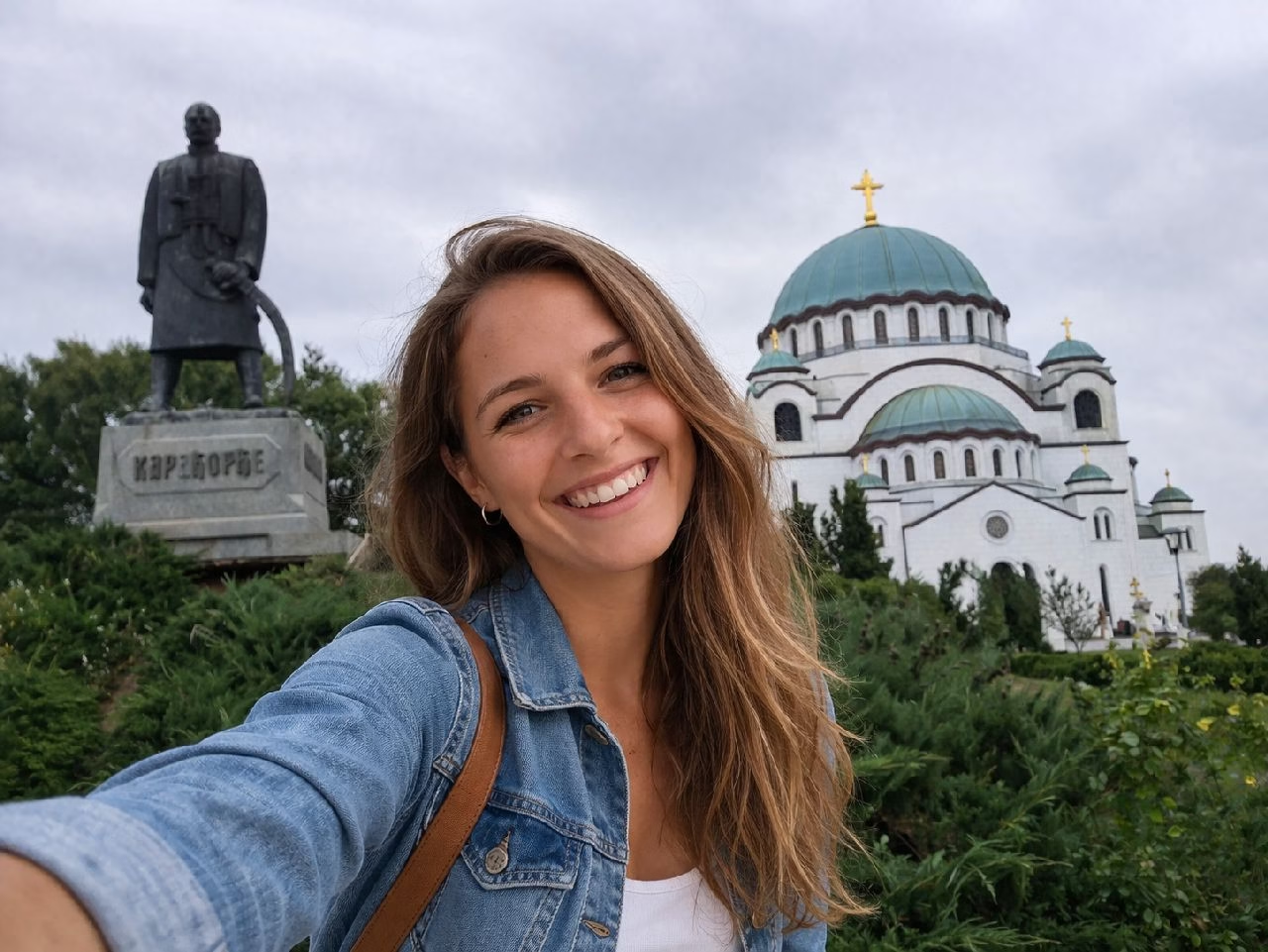
I’m Nevena, a writer and Belgrade native who now splits my time between Serbia and the UK. I’ve been living between two countries for 8 years, which means I understand Belgrade from both sides: as someone who grew up here, and as someone who had to rediscover it through expat eyes.
That dual perspective shapes everything I write. I cover expat life in Belgrade in depth, the things no guidebook tells you, like how to navigate the healthcare system, where to find reliable childcare, what property buying actually involves for foreigners, and how much things really cost when you live here rather than just visiting. I’ve done most of this myself, which means my guides are based on real experience, not research from a distance.
I also write about Serbia and the wider Balkans as a travel destination, a region that still surprises people with how much it offers. I’ve taken 35+ solo trips across Serbia, Bosnia & Herzegovina, North Macedonia, Montenegro, Croatia and Romania, and I speak Serbian, English and conversational Romanian.
Belgrade is one of Europe’s most underrated cities, and I’ve made it my mission to change that, one honest, practical guide at a time.