
March is a quiet, changeable month in Belgrade. The city is shaking off winter, crowds are thin, and you can see the main sights without queues, as long as you pack for weather that can swing from sunny to cold in a day.
Weather in March
Expect cool days and cold nights, with some sunshine, some rain and occasionally a late cold snap. Early March is usually colder than the end of the month. Exact conditions vary from year to year, so check the forecast a few days before you travel.
What to pack
- Layers: a warm, ideally waterproof jacket plus sweaters you can add or remove.
- Comfortable, waterproof shoes for walking, since streets can be wet.
- A scarf, hat and small umbrella.
For other seasons, see our packing guides for spring and autumn.
Things to do
Kalemegdan Fortress and Park sit where the Sava meets the Danube, and walking the ramparts is easiest without summer crowds. The park is free to enter; check opening hours for museums and other attractions inside. See our Kalemegdan guide.
The Temple of Saint Sava in Vračar is one of the largest Orthodox churches in the world and is free to visit; check hours before you go. Knez Mihailova and Skadarlija are good for walking, cafes and a traditional kafana lunch, which suits cool weather. See Skadarlija.
On wet days, head to the museums: see Belgrade’s museums. Parks such as Ada Ciganlija and Tašmajdan start to come alive on sunny spring days.
Events
Belgrade has a busy cultural calendar, with film, music and theatre programmes at various times of year. FEST, the international film festival, has traditionally been held in late winter, around the end of February and start of March, but dates change, so check the organisers’ site. We do not list other March festival dates here because they vary each year. The river clubs (splavovi) mostly reopen later in spring, so March nightlife is centred on indoor venues.
Food and drink
March suits Serbia’s hearty food. Try ćevapi and pljeskavica from a grill place, sarma (stuffed cabbage rolls) and prebranac (baked beans). Visit a local bakery (pekara) for burek or a kifla with yogurt at breakfast. If a host offers you rakija, accepting a small glass is a polite gesture. Local markets such as Kalenić, in Vračar, are good for seasonal produce.
Where to stay and getting around
Stari Grad is the most convenient base for first-time visitors, Vračar is quieter and Savamala suits nightlife; see our neighborhood guide. March is usually low season, so accommodation is often cheaper than in summer, but compare current prices. The centre is walkable, and buses, trams and trolleybuses cover the rest; see public transport. Ride apps such as CarGo and Bolt show the fare before you book.
Money and local manners
- Serbia uses the dinar (RSD). Cards are widely accepted in central Belgrade, but carry some cash for bakeries, markets and small cafes.
- Learn a few phrases: Dobar dan (good day) and Hvala (thank you) are appreciated. English is widely spoken by younger people.
- Check exchange rates and fees before using standalone ATMs or exchange offices.
Frequently asked questions
Is March a good time to visit Belgrade?
It is a good choice if you prefer quiet streets and lower prices over warm weather. Plan indoor options for cold or wet days.
Will it snow?
Late snow is possible but not the norm. Pack for cold, wet weather and check the forecast.
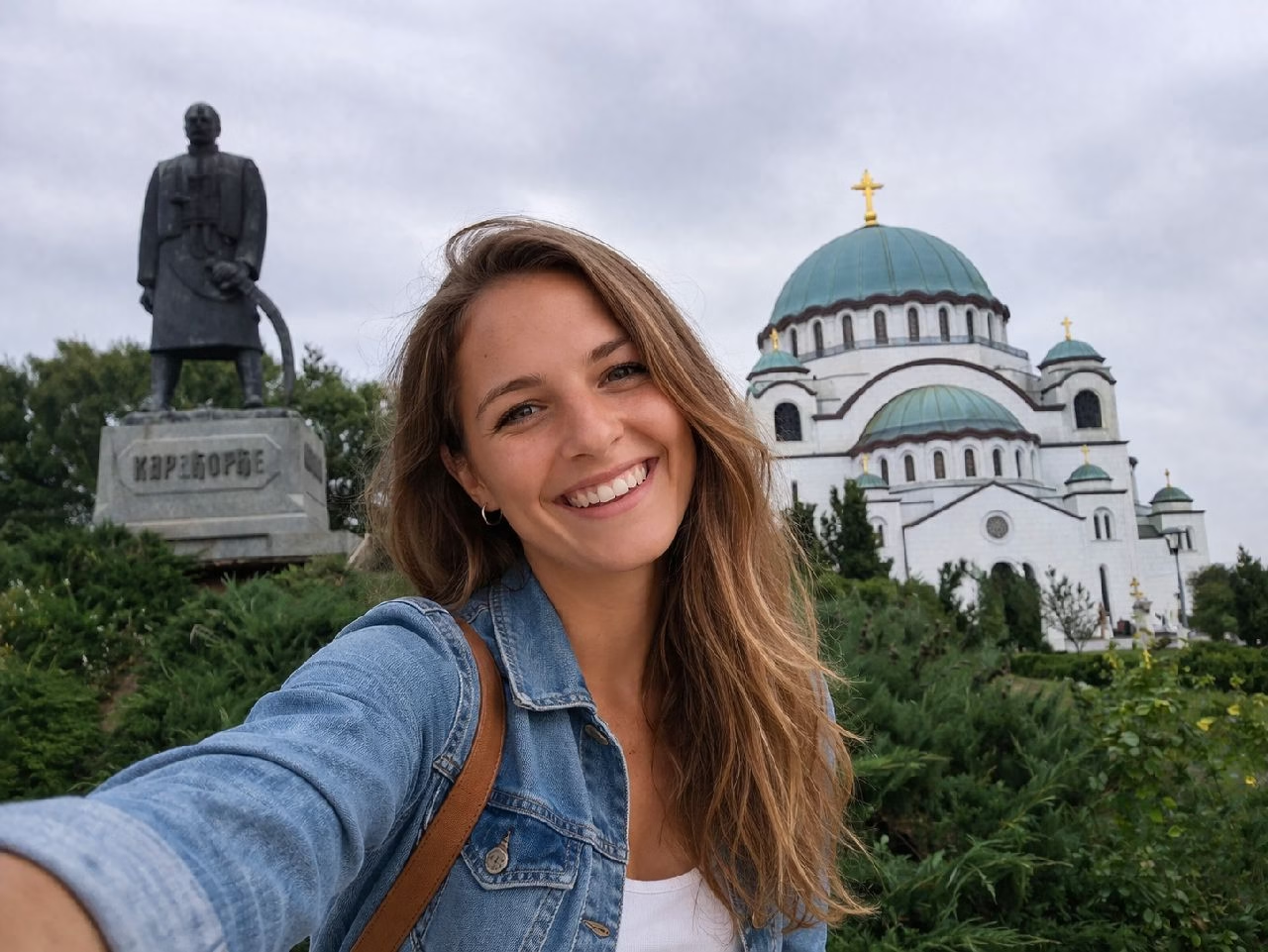
I’m Nevena, a writer and Belgrade native who now splits my time between Serbia and the UK. I’ve been living between two countries for 8 years, which means I understand Belgrade from both sides: as someone who grew up here, and as someone who had to rediscover it through expat eyes.
That dual perspective shapes everything I write. I cover expat life in Belgrade in depth, the things no guidebook tells you, like how to navigate the healthcare system, where to find reliable childcare, what property buying actually involves for foreigners, and how much things really cost when you live here rather than just visiting. I’ve done most of this myself, which means my guides are based on real experience, not research from a distance.
I also write about Serbia and the wider Balkans as a travel destination, a region that still surprises people with how much it offers. I’ve taken 35+ solo trips across Serbia, Bosnia & Herzegovina, North Macedonia, Montenegro, Croatia and Romania, and I speak Serbian, English and conversational Romanian.
Belgrade is one of Europe’s most underrated cities, and I’ve made it my mission to change that, one honest, practical guide at a time.