
Permanent residence in Serbia is available to foreigners who have lived in the country legally for a continuous period on temporary residence, with shorter routes for some family members of Serbian citizens. The details, required period and documents are set by the Law on Foreigners and have been amended over time, so confirm the current rules with the Ministry of the Interior before you plan around any timeline.
The Usual Route
Permanent residence normally follows a period of continuous legal stay on temporary residence permits. According to the Ministry of the Interior’s information page for foreigners, the general requirement is now three years of continuous temporary residence (it was five years before the 2024 amendments to the Law on Foreigners), with shorter or waived periods for some cases such as the children of Serbian citizens. Because the periods and the rules on allowed absences are specific, ask the police administration or a Serbian lawyer for the current requirement before you count your years.
Continuity matters. Long absences from Serbia can interrupt the period, and gaps between permits can reset the clock. Keep proof of your legal stay, such as copies of every permit and your registered address history.
How Continuity Is Measured
The official page describes continuous residence as effective residence in Serbia, meaning you actually live here rather than only hold a permit. It sets limits on absences during the qualifying period, covering both one long trip and several shorter ones. Because these limits can change, check the current figures before you plan a long stay abroad. A person who spends most of the year in another country, even with a valid permit, may find the application refused.
You also need to hold valid temporary residence on the day you apply. Guidance says to apply shortly before the end of the qualifying period and not after your permit has expired, so the safest approach is to extend your temporary permit on time while you prepare the permanent application.
Cases Without the Full Waiting Period
The Ministry’s page lists some situations in which permanent residence can be granted without the general period. They include a minor whose parent is a Serbian citizen or a foreigner with permanent residence, a person who originates from Serbia or is of Serbian origin, and, in some cases, another foreigner with approved temporary residence where this is in Serbia’s interest. These cases still require proof of identity, support and a registered address, and the decision is not automatic. Ask the police directorate how the rules apply to you.
Documents Usually Needed
- Valid passport and your current residence permit
- Proof of the period of lawful temporary residence
- Proof of accommodation and registered address
- Proof of means of support, such as employment or income documents
- Health insurance
- Criminal record certificate, with apostille or legalisation and a certified Serbian translation where documents are foreign
- Application form and payment of the administrative fees
Applications are submitted to the police administration of the Ministry of the Interior, and the exact list differs between cases. Fees and processing times change, so ask the authorities for current figures. Many applicants use a local lawyer, because forms and decisions are in Serbian.
Residence by Marriage or Family
Spouses and certain close relatives of Serbian citizens can qualify for temporary residence on family grounds, and for permanent residence after a shorter period than the general route. You will need to prove the relationship and, usually, that you live together, plus means of support and accommodation. Marriage does not give permanent residence automatically, and authorities check that the relationship is genuine.
Residence by Investment
Serbia does not offer a general “golden visa” or fixed-investment route to permanent residence. Buying property or setting up a company can support some temporary residence applications, but it does not guarantee a permit or lead directly to permanent status. Be careful with agents who advertise guaranteed residence for a set investment amount. See our property buying guide and residence permit guide for how property fits in.
What Permanent Residence Gives You
- The right to live in Serbia without having to renew a purpose-based permit, subject to rules on maintaining the status.
- Fewer limits on employment than a permit tied to one employer, although you should check your exact rights.
- Access to public services under the conditions that apply to residents. See our healthcare guide.
It does not make you a Serbian citizen, and it does not give you any right to live or work in the EU or Schengen Area. Entry to other countries depends on your passport and each country’s rules.
Temporary and Permanent Residence at a Glance
| Topic | Temporary residence | Permanent residence |
|---|---|---|
| Basis | A specific purpose such as work, study, family or property | A period of continuous legal residence, or a special case such as a minor child of a citizen |
| Length | Limited, with a maximum of up to three years per permit | Indefinite, subject to rules on keeping the status |
| Renewal | Must be extended before expiry | No purpose-based renewal |
| Tied to an employer | Often, for work-based permits | Fewer limits, but check your exact rights |
| Where to apply | Police administration or the official portals | In person at the police directorate for your address |
Citizenship
Serbian citizenship by naturalisation has its own conditions, including a period of residence, proof of means, language and legal requirements. Whether you have to renounce your existing citizenship depends on the rules at the time, so check with the Serbian authorities and with the country of your current citizenship, which may have its own rules on dual nationality.
Common Problems
- Gaps between permits, which can break continuity.
- Long periods spent outside Serbia.
- Foreign documents that lack an apostille or a certified translation.
- Not reporting a change of address or employer.
Tax residence is a separate question from immigration status. See our expat taxes guide.
Tips for a Smoother Application
- Start counting early. Note the date your first temporary permit begins and work out when the required period ends. Then check the filing window that applies to you.
- Keep a travel log. A simple record of the dates you enter and leave Serbia helps you stay within the absence limits.
- Renew on time. A lapse between permits is the easiest way to lose continuity, so extend each permit before it expires.
- Prepare proof of income. Salary certificates, contracts, pension proof or a bank certificate are the usual ways to show you can support yourself.
- Register your address. A current registered address is a standard requirement, so make sure your landlord has completed it.
- Use certified translators. Foreign documents need a court-certified translation, and some statements must be notarized.
- Keep copies. Store scans of every permit, receipt and certificate in one folder.
Frequently Asked Questions
How long until I can apply for permanent residence in Serbia?
Generally after three years of continuous legal temporary residence, with shorter or waived periods for some family cases. Check the current requirement, because older articles still quote five years.
Can I buy my way to permanent residence?
Not through a general investor scheme. Property or a company can support a temporary permit in some cases, but not guarantee it.
Does permanent residence let me move to the EU?
No. It only concerns your status in Serbia.
When should I submit the application?
The official guidance says you can apply shortly before you complete the required period, roughly the last 60 days, and no later than the expiry of your current temporary residence or single permit. You must still hold valid temporary residence when you file. Because rules and guidance change, confirm the exact window before you plan.
Does time spent abroad count against me?
Yes, it can. The Ministry of the Interior describes continuous residence as effective residence in Serbia, with limits on how long you can be away. Check the current limits for a single long trip and for several shorter trips before you book extended travel.
Can children get permanent residence?
A minor whose parent is a Serbian citizen or holds permanent residence may qualify without waiting for the full period. Both parents usually need to be involved in the application, so check what the police directorate asks for in your situation.
Do I need to speak Serbian?
The Ministry’s permanent residence page does not list a language test, although citizenship has language requirements. Learning at least basic Serbian still makes every office visit easier. See our guide to learning Serbian.
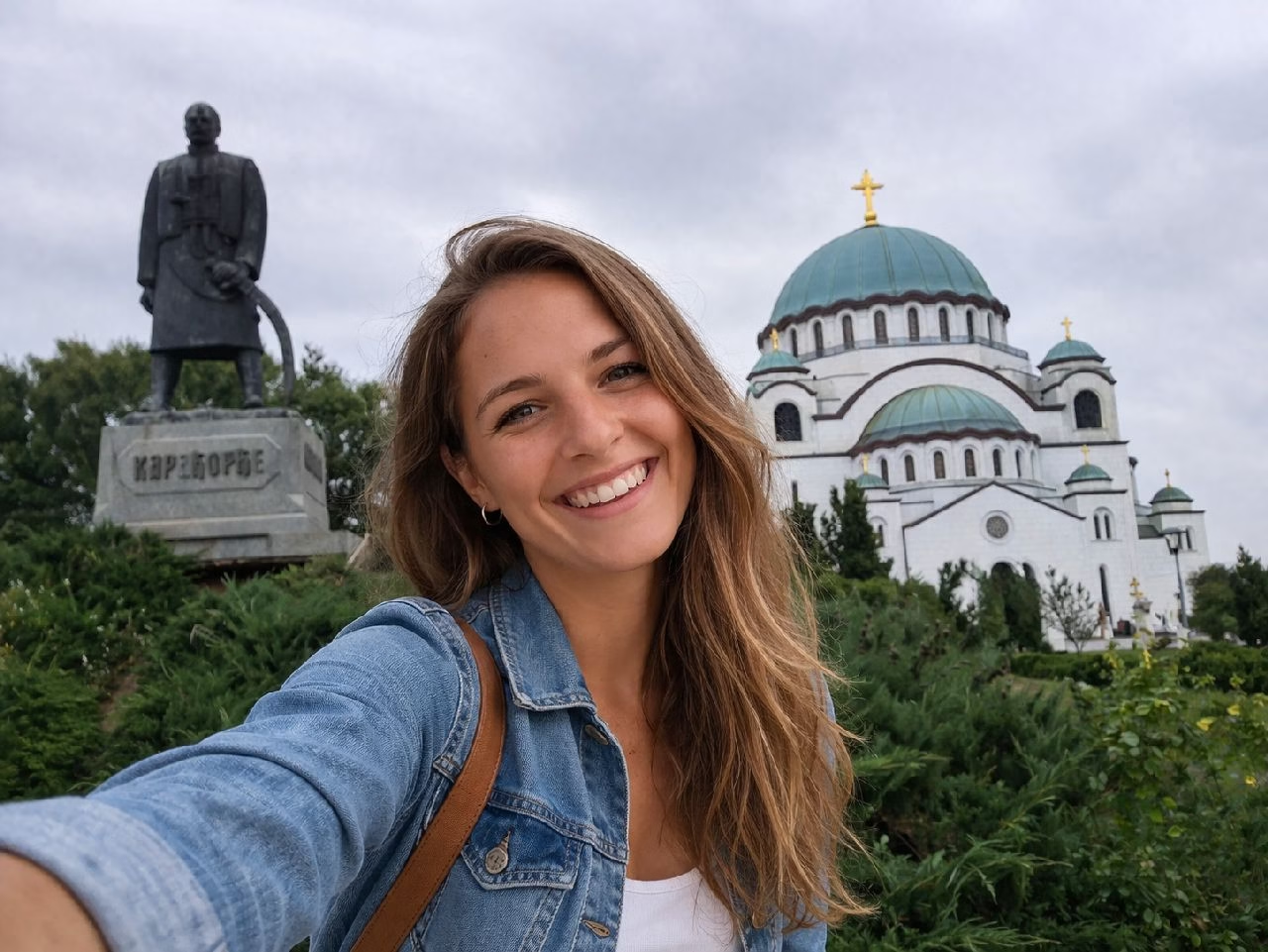
I’m Nevena, a writer and Belgrade native who now splits my time between Serbia and the UK. I’ve been living between two countries for 8 years, which means I understand Belgrade from both sides: as someone who grew up here, and as someone who had to rediscover it through expat eyes.
That dual perspective shapes everything I write. I cover expat life in Belgrade in depth, the things no guidebook tells you, like how to navigate the healthcare system, where to find reliable childcare, what property buying actually involves for foreigners, and how much things really cost when you live here rather than just visiting. I’ve done most of this myself, which means my guides are based on real experience, not research from a distance.
I also write about Serbia and the wider Balkans as a travel destination, a region that still surprises people with how much it offers. I’ve taken 35+ solo trips across Serbia, Bosnia & Herzegovina, North Macedonia, Montenegro, Croatia and Romania, and I speak Serbian, English and conversational Romanian.
Belgrade is one of Europe’s most underrated cities, and I’ve made it my mission to change that, one honest, practical guide at a time.