
When traveling to a new country, it’s important to familiarize yourself with the local greetings and basic polite expressions. In many cultures, a simple “hello” or “good morning” can go a long way in making a positive first impression. In addition to learning how to say “hello” in the local language, it’s also important to know how to say “please” and “thank you.” These basic expressions of politeness can show respect for the local customs and help you navigate social interactions more smoothly.
In some cultures, it is customary to greet people with a handshake, while in others, a bow or a kiss on the cheek may be more appropriate. Understanding these cultural nuances can help you avoid unintentionally offending someone. Additionally, learning how to say “excuse me” and “I’m sorry” can help you navigate crowded spaces and apologize for any unintentional mistakes. By taking the time to learn these basic polite expressions, you can show respect for the local customs and make a positive impression on the people you meet during your travels.
Ordering Food and Drinks
One of the most enjoyable aspects of traveling is experiencing the local cuisine. Whether you’re dining at a restaurant or grabbing a quick bite to eat at a street vendor, knowing how to order food and drinks in the local language can enhance your dining experience. When ordering food, it’s important to know how to ask for the menu, as well as how to communicate any dietary restrictions or allergies you may have. Additionally, knowing how to ask for recommendations from the server can help you discover new and delicious dishes to try.
When ordering drinks, it’s important to know how to ask for water, coffee, tea, or any other beverages you may want to enjoy. In some cultures, it is customary to say “cheers” or “to your health” before taking the first sip of a drink, so learning these phrases can help you participate in local customs and traditions. By taking the time to learn how to order food and drinks in the local language, you can enhance your dining experience and show respect for the local culture.
Asking for Directions and Transportation
Navigating a new city can be challenging, especially if you don’t speak the local language. Knowing how to ask for directions and communicate your transportation needs can help you get around more easily and avoid getting lost. When asking for directions, it’s important to know how to ask where a specific location is, as well as how to understand the response you receive. Additionally, knowing how to ask for help if you get lost or need assistance can be invaluable when navigating unfamiliar streets and neighborhoods.
When it comes to transportation, knowing how to ask for a taxi, bus, or train can help you get from place to place more efficiently. Additionally, knowing how to ask for the fare and confirm the destination with the driver can help you avoid any misunderstandings. By taking the time to learn how to ask for directions and communicate your transportation needs in the local language, you can navigate the city more confidently and enjoy a smoother travel experience.
Shopping and Bargaining
Shopping is a popular activity for many travelers, as it allows them to bring home unique souvenirs and gifts from their trip. When shopping in a foreign country, it’s important to know how to communicate with the shopkeepers and vendors in the local language. Knowing how to ask for the price of an item, as well as how to negotiate or bargain for a lower price, can help you get the best deals on your purchases. Additionally, knowing how to ask for different sizes or colors of an item can help you find exactly what you’re looking for.
In some cultures, bargaining is a common practice when shopping at markets or street vendors. Knowing how to negotiate the price of an item while showing respect for the seller can help you navigate this aspect of shopping more effectively. Additionally, knowing how to say “thank you” and “goodbye” after making a purchase can show appreciation for the seller’s time and effort. By taking the time to learn how to shop and bargain in the local language, you can enhance your shopping experience and bring home unique souvenirs from your travels.
Emergency Phrases and Getting Help
While no one wants to think about encountering an emergency while traveling, it’s important to be prepared for any unexpected situations that may arise. Knowing how to ask for help and communicate emergency phrases in the local language can be invaluable in times of need. Whether you need to ask for assistance from a passerby or communicate with emergency services, knowing how to ask for help in the local language can help you get the assistance you need more quickly.
In addition to knowing how to ask for help, it’s also important to know how to communicate basic emergency phrases such as “help,” “fire,” “police,” and “hospital.” These phrases can help you navigate emergency situations more effectively and communicate your needs to those around you. By taking the time to learn these essential phrases in the local language, you can be better prepared for any unexpected emergencies that may arise during your travels.
Making Small Talk and Socializing
One of the most enjoyable aspects of traveling is meeting new people and making connections with locals and other travelers. Knowing how to make small talk and socialize in the local language can help you build rapport with those you meet and make your travel experience more enriching. Whether you’re striking up a conversation with a fellow traveler at a cafe or chatting with locals at a cultural event, knowing how to make small talk in the local language can help you connect with others more easily.
In addition to making small talk, it’s also important to know how to express common social niceties such as “nice to meet you,” “how are you,” and “have a good day.” These expressions of politeness can show respect for the local customs and help you build positive relationships with those you meet during your travels. By taking the time to learn how to make small talk and socialize in the local language, you can enhance your travel experience and make meaningful connections with people from around the world.
Expressing Gratitude and Farewells
As your travels come to an end, it’s important to know how to express gratitude and say farewell in the local language. Whether you’re thanking a hotel staff member for their hospitality or saying goodbye to new friends you’ve made during your trip, knowing how to express gratitude and bid farewell in the local language can leave a positive lasting impression. Additionally, knowing how to say “thank you” and “goodbye” in the local language can show respect for the local customs and traditions.
In some cultures, it is customary to exchange small gifts or tokens of appreciation when saying farewell. Knowing how to express gratitude for these gestures in the local language can help you show appreciation for the kindness of others. Additionally, knowing how to wish someone well in their future endeavors can leave a positive impression on those you’ve met during your travels. By taking the time to learn how to express gratitude and bid farewell in the local language, you can leave a positive lasting impression on those you’ve met during your travels.
In conclusion, learning basic phrases in the local language can greatly enhance your travel experience by allowing you to communicate more effectively with locals and navigate various social situations with ease. Whether it’s ordering food and drinks, asking for directions and transportation, shopping and bargaining, or expressing gratitude and farewells, knowing how to communicate in the local language can help you show respect for the local customs and traditions while making meaningful connections with people from around the world. By taking the time to learn these essential phrases before your trip, you can enhance your travel experience and make lasting memories during your adventures abroad.
The list of top 100 most common phrases in Serbian
Here’s a carefully curated list of 100 essential Serbian phrases that tourists in Belgrade (or anywhere in Serbia) will find genuinely useful — covering greetings, transportation, dining, shopping, and emergencies.
Each entry includes the Serbian phrase (Latin script) + English translation + phonetic pronunciation (approximate).
🗣️ Basic Greetings & Politeness
- Zdravo — Hello (ZDRAH-voh)
- Dobar dan — Good day / Good afternoon (DOH-bar dahn)
- Dobro jutro — Good morning (DOH-broh YOO-troh)
- Dobro veče — Good evening (DOH-broh VEH-cheh)
- Ćao — Hi / Bye (CHOW)
- Doviđenja — Goodbye (doh-vee-JEN-ya)
- Molim — Please / You’re welcome (MOH-leem)
- Hvala — Thank you (HVAH-lah)
- Hvala puno — Thank you very much (HVAH-lah POO-no)
- Izvinite — Excuse me / Sorry (eez-VEE-nee-teh)
- Oprostite — I’m sorry (oh-PROH-stee-teh)
- Kako ste? — How are you? (KAH-koh steh)
- Dobro sam — I’m fine (DOH-broh sahm)
- Drago mi je — Nice to meet you (DRAH-goh mee yeh)
- Govorite li engleski? — Do you speak English? (GOH-voh-ree-teh lee ENG-lehs-kee)
- Ne govorim srpski — I don’t speak Serbian (neh GOH-voh-reem SRP-skee)
- Možete li ponoviti? — Can you repeat that? (MOH-zhe-teh lee poh-NOH-vee-tee)
- Razumem — I understand (rah-ZOO-mehm)
- Ne razumem — I don’t understand (neh rah-ZOO-mehm)
- Koliko košta? — How much does it cost? (KOH-lee-koh KOH-shtah)
🚗 Transportation & Directions
- Gde je autobuska stanica? — Where is the bus station? (gdeh yeh OW-toh-boos-kah STAH-nee-tsah)
- Gde je železnička stanica? — Where is the train station? (gdeh yeh zheh-LEH-zhnee-chkah STAH-nee-tsah)
- Gde je aerodrom? — Where is the airport? (gdeh yeh AH-eh-roh-drohm)
- Gde je taksi? — Where can I find a taxi? (gdeh yeh TAK-see)
- Koliko košta do centra? — How much to the city center? (KOH-lee-koh KOH-shtah doh TSEN-trah)
- Idem u hotel — I’m going to the hotel (EE-dem oo HOH-tehl)
- Zaustavite ovde, molim — Stop here, please (zah-oo-STAH-vee-teh OHV-deh, MOH-leem)
- Desno — Right (DES-noh)
- Levo — Left (LEH-voh)
- Pravo — Straight ahead (PRAH-voh)
- Daleko je? — Is it far? (dah-LEH-koh yeh)
- Gde je najbliža metro stanica? — Where is the nearest metro station? (gdeh yeh NYE-blee-zhah MEH-troh STAH-nee-tsah)
- Koji broj autobusa ide do centra? — Which bus goes to the center? (KOH-yee broy OW-toh-boo-sah EE-deh doh TSEN-trah)
- Kada polazi voz za Novi Sad? — When does the train to Novi Sad leave? (KAH-dah poh-LAH-zee voz zah NOH-vee sahd)
- Kartu, molim — A ticket, please (KAHR-too MOH-leem)
🍽️ Food & Drink
- Mogu li da vidim meni? — Can I see the menu? (MOH-goo lee dah VEE-deem MEH-nyoo)
- Šta preporučujete? — What do you recommend? (shtah preh-poh-ROO-choo-yeh-teh)
- Vodu, molim — Water, please (VOH-doo MOH-leem)
- Negaziranu — Still (non-carbonated) (neh gah-ZEE-rah-noo)
- Gazirana voda — Sparkling water (GAH-zee-rah-nah VOH-dah)
- Kafu, molim — Coffee, please (KAH-foo MOH-leem)
- Crna kafa — Black coffee (TSR-nah KAH-fah)
- Sa mlekom — With milk (sah MLEH-kohm)
- Pivo, molim — Beer, please (PEE-voh MOH-leem)
- Čašu vina, molim — A glass of wine, please (CHAH-shoo VEE-nah MOH-leem)
- Račun, molim — The bill, please (RAH-choon MOH-leem)
- Ukusno — Delicious (OO-koos-noh)
- Ne jedem meso — I don’t eat meat (neh YEH-dem MEH-soh)
- Ima li vegetarijanske opcije? — Are there vegetarian options? (EE-mah lee VEH-geh-tah-ree-YAHN-skeh OP-see-yeh)
- Bez glutena, molim — Gluten-free, please (behz GLOO-teh-nah MOH-leem)
🏨 Accommodation
- Imam rezervaciju — I have a reservation (EE-mahm reh-zehr-VAH-tsyoo)
- Želim da rezervišem sobu — I’d like to book a room (ZHEH-leem dah reh-ZEHR-vee-shem SOH-boo)
- Jednokrevetna soba — Single room (YED-noh-kreh-veht-nah SOH-bah)
- Dvokrevetna soba — Double room (DVOK-reh-veht-nah SOH-bah)
- Koliko noći? — How many nights? (KOH-lee-koh NOH-chee)
- Da li je doručak uključen? — Is breakfast included? (dah lee yeh DOH-roo-chahk OOK-lyoo-chen)
- Gde je lift? — Where is the elevator? (gdeh yeh LEEFT)
- Imam problem sa sobom — There’s a problem with my room (EE-mahm PROH-blehm sah SOH-bohm)
- Možete li mi pomoći? — Can you help me? (MOH-zhe-teh lee mee poh-MOH-chee)
- Hvala na pomoći — Thanks for your help (HVAH-lah nah poh-MOH-chee)
🏙️ Sightseeing & Activities
- Gde je Kalemegdan? — Where is Kalemegdan? (gdeh yeh KAH-leh-mehg-dahn)
- Gde je Skadarlija? — Where is Skadarlija? (gdeh yeh skah-DAHR-lee-yah)
- Kada počinje tura? — When does the tour start? (KAH-dah POH-chee-neh TOO-rah)
- Koliko traje tura? — How long is the tour? (KOH-lee-koh TRAH-yeh TOO-rah)
- Ima li vodič na engleskom? — Is there a guide in English? (EE-mah lee VOH-deech nah ENG-lehs-kohm)
- Gde mogu da kupim karte? — Where can I buy tickets? (gdeh MOH-goo dah KOO-peem KAHR-teh)
- Da li je ulaz besplatan? — Is entry free? (dah lee yeh OO-lahz BEHS-plah-tahn)
- Otvoreno do kada? — Until what time are you open? (OH-tvoh-reh-no doh Kha-dah)
- Ima li vodič na srpskom jeziku? — Is there a guide in Serbian? (EE-mah lee VOH-deech nah SRP-skohm YE-zee-koo)
- Gde se nalazi muzej? — Where is the museum located? (gdeh seh NAH-lah-zee MOO-zehy)
🛍️ Shopping & Money
- Gde mogu da menjam novac? — Where can I exchange money? (gdeh MOH-goo dah MEN-yahm NOH-vahts)
- Primate li kartice? — Do you accept cards? (PREE-mah-teh lee KAHR-tee-tseh)
- Imate li suvenire? — Do you have souvenirs? (EE-mah-teh lee soo-veh-NEE-reh)
- Imate li nešto jeftinije? — Do you have something cheaper? (EE-mah-teh lee NESH-toh YEF-tee-nee-yeh)
- Samo gledam — I’m just looking (SAH-moh GLEH-dahm)
- Može popust? — Can I get a discount? (MOH-zheh POH-poost)
- Račun, molim — The receipt, please (RAH-choon MOH-leem)
- Prelepo! — Beautiful! (PREH-leh-poh)
- Odakle je ovo? — Where is this from? (OH-dah-kleh yeh OH-voh)
- Ima li duty-free u Belgradu? — Is there duty-free in Belgrade? (EE-mah lee DYOO-tee free oo bel-GRAH-doo)
💬 Social & Everyday Interactions
- Da — Yes (dah)
- Ne — No (neh)
- Možda — Maybe (MOHZH-dah)
- U redu — Okay / All right (oo REH-doo)
- Sjajno — Great! (SYEYE-no)
- Odlično — Excellent! (OD-leech-no)
- Nemam pojma — I have no idea (NEH-mahm POY-mah)
- Kako se kaže … na srpskom? — How do you say … in Serbian? (KAH-koh seh KAH-zheh … nah SRP-skohm)
- Imam pitanje — I have a question (EE-mahm PEE-tah-nyeh)
- Sve je u redu — Everything’s fine (Sveh yeh oo REH-doo)
🆘 Emergencies
- Upomoć! — Help! (OO-poh-mohch)
- Zovite policiju! — Call the police! (ZOH-vee-teh poh-LEE-tsee-yoo)
- Treba mi lekar — I need a doctor (TREH-bah mee LEH-kahr)
- Gde je bolnica? — Where is the hospital? (gdeh yeh BOHL-nee-tsah)
- Izgubio sam se — I’m lost (eez-GOO-bee-oh sahm seh)
- Izgubila sam se — I’m lost (female speaker) (eez-GOO-bee-lah sahm seh)
- Izgubio sam pasoš — I lost my passport (eez-GOO-bee-oh sahm PAH-sohsh)
- Pozovite taksi, molim — Please call a taxi (poh-ZOH-vee-teh TAK-see, MOH-leem)
- Imam alergiju — I have an allergy (EE-mahm ah-LEHR-gee-yoo)
- Sve je u redu sada — Everything is fine now (sveh yeh oo REH-doo sah-dah)
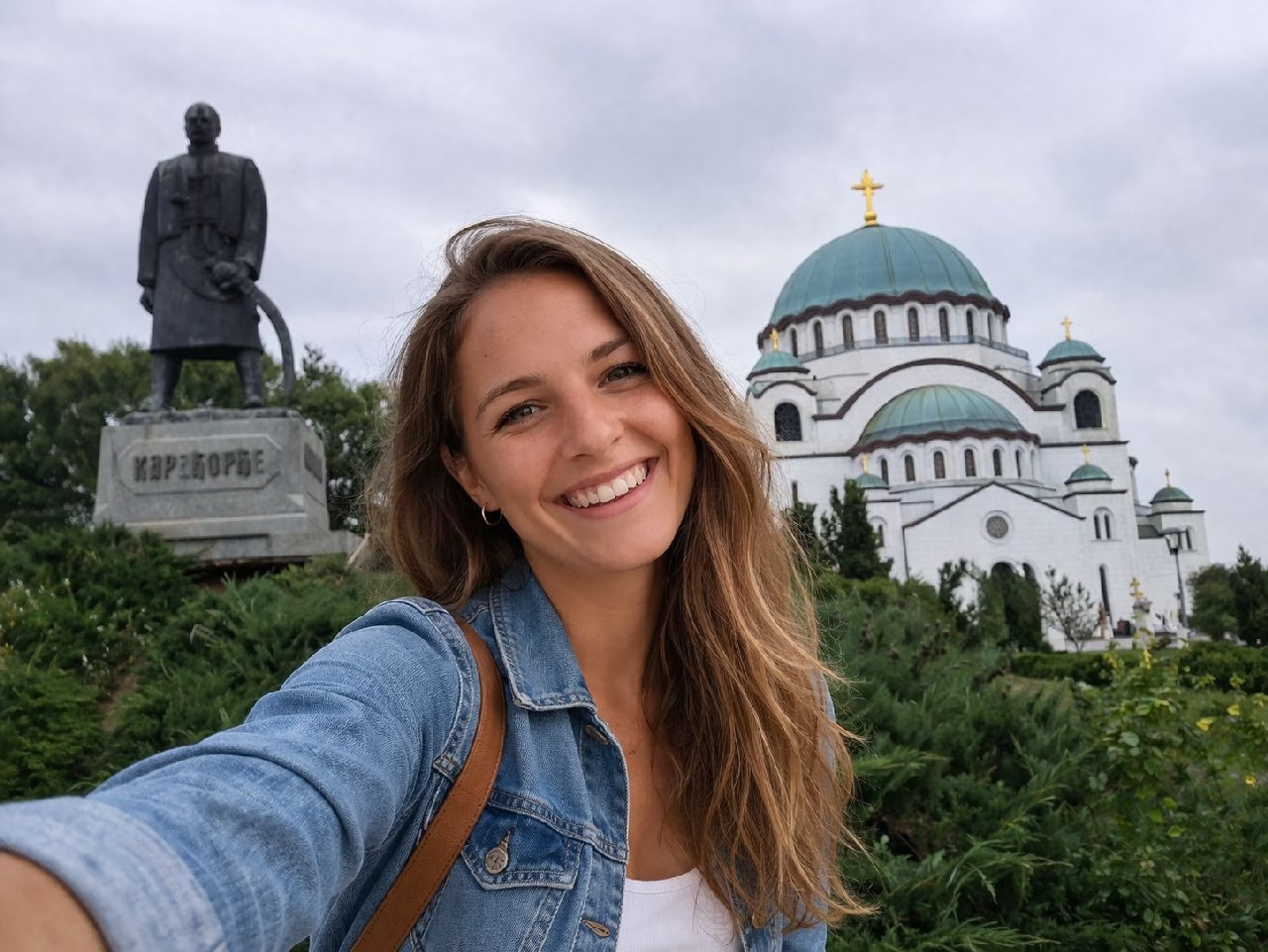
I’m Nevena, a writer and Belgrade native who now splits my time between Serbia and the UK. I’ve been living between two countries for 8 years, which means I understand Belgrade from both sides: as someone who grew up here, and as someone who had to rediscover it through expat eyes.
That dual perspective shapes everything I write. I cover expat life in Belgrade in depth, the things no guidebook tells you, like how to navigate the healthcare system, where to find reliable childcare, what property buying actually involves for foreigners, and how much things really cost when you live here rather than just visiting. I’ve done most of this myself, which means my guides are based on real experience, not research from a distance.
I also write about Serbia and the wider Balkans as a travel destination, a region that still surprises people with how much it offers. I’ve taken 35+ solo trips across Serbia, Bosnia & Herzegovina, North Macedonia, Montenegro, Croatia and Romania, and I speak Serbian, English and conversational Romanian.
Belgrade is one of Europe’s most underrated cities, and I’ve made it my mission to change that, one honest, practical guide at a time.