
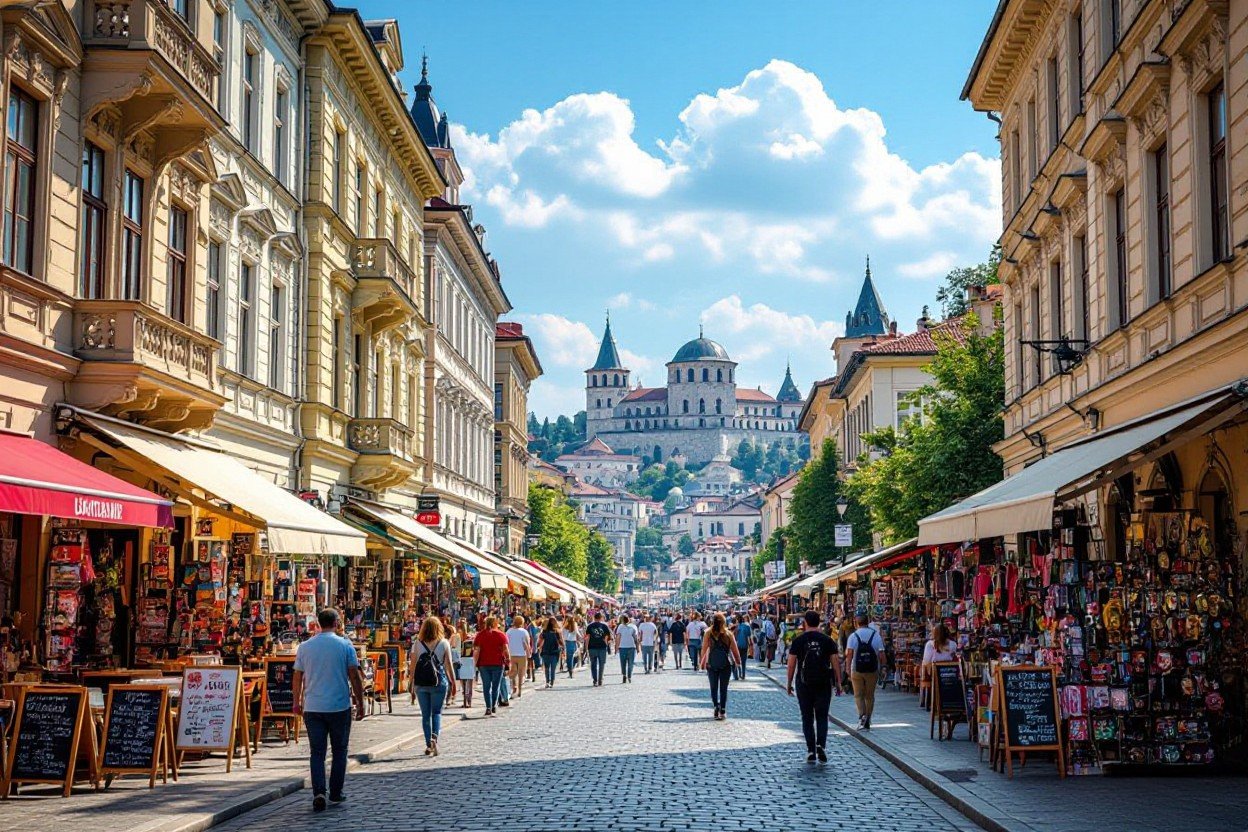
Belgrade offers you a variety of ways to explore the city, from walking its lively streets to using public transport like trams and buses. You can also hop on a bike or an electric scooter for a fun, flexible ride. Taxis, Uber, and other ride-share options provide convenient door-to-door service, but always use official vehicles for your safety. When heading to the airport, you have multiple choices including shuttle buses, taxis, or private airport transfers. Navigating Belgrade is easy and enjoyable once you know your options!

Key Takeaways:
- Belgrade offers multiple navigation options including walking, cycling, electric scooters, traditional public transport (buses, trams, trolleybuses), taxis, and ride-share services like Uber and CarGo for convenient city travel.
- Public transport is affordable and extensive, but for more flexibility and comfort, taxis and ride-share apps provide easy door-to-door service, especially during late hours when public transport is limited.
- For airport transfers, options include public buses (line 72 and A1), shuttle services, taxis, and ride-share apps, ensuring travelers have a range of convenient and cost-effective ways to reach Belgrade Nikola Tesla Airport.
Exploring the Streets: Walking Your Way Through Belgrade
Walking through Belgrade reveals the city’s rich history and vibrant culture in a way no other mode of transportation can match. The compact city center makes it incredibly convenient to stroll from one notable site to another without the hassle of traffic or waiting for connections. You’ll find the sidewalks well-maintained in central areas like Knez Mihailova Street, a lively pedestrian zone filled with shops, cafes, and street performers. Moving through these streets, you can soak up the atmosphere and catch glimpses of Belgrade’s unique blend of architectural styles, from Ottoman influences to socialist-era buildings.
Once you’ve covered the main central zones on foot, you might consider mixing walking with other options such as cycling or scooters for longer distances, especially along the riverbanks of the Sava and Danube. Many locals prefer these for quick urban trips, while taxis and ride-sharing services like Uber and CarGo stand ready for late-night or airport connections. The accessibility of multiple transport choices means you can adapt your exploration style dynamically, but the intimacy of walking remains unbeatable in truly capturing Belgrade’s spirit.
The Best Walking Routes and Landmarks
Knez Mihailova Street serves as the heart of your walking adventure—its pedestrian-only stretch is lined with charming boutiques, historic buildings, and plenty of street cafes where you can pause and people-watch. From there, head towards Kalemegdan Fortress, which offers not only stunning views over the confluence of the Sava and Danube rivers but also sprawling parklands perfect for a relaxing break. This fortress is a must-see landmark that reveals layers of Belgrade’s centuries-old history with numerous museums and monuments within its walls.
Follow the riverside pathways from Kalemegdan to the trendy Savamala district, known for its vibrant nightlife and art scene. This route guides you through a changing cityscape—from historic battlegrounds to modern, creative hubs. The area around Republic Square also deserves attention; it’s a central meeting point with the National Museum and National Theatre nearby, making it ideal for combining sightseeing with a cultural experience. You can easily complete these routes on foot within a day or two, making your exploration both enriching and manageable.
Safety and Local Etiquette While Walking
Walking in Belgrade’s central neighborhoods is generally safe day and night, but staying alert in more crowded or less-lit areas adds an extra layer of comfort. Some streets, especially late at night or in peripheral zones, might feel isolated or a bit rough, so sticking to main roads and well-lit pedestrian zones is a smart move. The city’s sidewalks can be uneven in older quarters, so comfortable shoes are a must—your feet will thank you after a day of exploration.
Locals are friendly and often engaged in lively conversation, but you’ll notice a more reserved politeness when it comes to public spaces. A quick nod or smile goes a long way, and waiting your turn patiently in queues reflects well on visitors. Avoid loud or disruptive behavior, especially near churches and government buildings, where a quiet respect is expected. Also, crossing streets outside designated crosswalks can be risky since traffic drives on the right but sometimes pedestrians move unpredictably; watching both ways before stepping off the curb helps you stay safe.
Belgrade’s pedestrian culture is relaxed yet mindful. While jaywalking happens occasionally, you’ll find that most locals use marked crossings, especially around busier intersections. When walking near tram lines or bicyclists, keeping to sidewalks and being aware of your surroundings keeps your experience smooth. Staying hydrated and taking breaks at local cafes during warmer months enhances comfort, allowing you to enjoy both the walk and the city’s vibrant street life.
Two Wheels, One City: Cycling Through Belgrade
Exploring Belgrade on a bicycle offers a lively and immersive way to see the city, combining mobility with a touch of adventure. The city’s terrain is mostly flat with some gentle hills, making it accessible even if you’re not a seasoned cyclist. You’ll find an increasing number of dedicated bike lanes and cycling-friendly areas, especially along the rivers Sava and Danube. Cycling gives you the freedom to seamlessly hop between neighborhoods like Vračar, Dorćol, and the waterfront, all while avoiding traffic jams that can plague other modes of transportation during rush hours.
Belgrade also has a growing community of casual and daily cyclists, so sharing the roads means adapting to local cycling habits which balance cautiousness with brisk movement. Whether you want to cruise the Kalemegdan Park or venture through the city’s buzzing streets, your bike acts as both your guide and your ticket to a more authentic experience throughout this vibrant city.
Popular Cycling Paths and Bike Rentals
You’ll find some of the best cycling routes following Belgrade’s riverbanks, where dedicated bike paths stretch for several kilometers, offering scenic views and a smooth ride away from heavy traffic. The Sava Promenade to Ada Ciganlija island is a favorite for locals and visitors alike, blending nature with urban vibes. Another notable path runs along the Danube, taking you past the iconic Belgrade Fortress and various waterfront cafés.
For renting a bike, services like Nextbike and Lime offer easy access via mobile apps, with greased spots scattered around the city center, parks, and near popular tourist spots. You can opt for simple city bikes or electric versions, which help you conquer Belgrade’s occasional hills with less effort. Rentals usually charge by the hour and can be extremely affordable, making spontaneous cycling tours a breeze.
Tips for Navigating Traffic on a Bicycle
Moving through Belgrade’s traffic on a bike demands sharp awareness and a good sense of timing, as vehicles, pedestrians, and fellow cyclists often share streets without clear-cut right of way. Busier intersections, particularly near Slavija and Republic Square, can get hectic, so picking your moment and signaling clearly will save you stress. Watch out especially for cars making sudden turns or opening doors without warning – vigilance is your best tool.
Wearing a helmet and bright clothing boosts your safety and visibility, especially during dusk or rainy days when Belgrade’s roads can become slippery. Traffic lights and pedestrian crossings function well, but some drivers might rush or overlook cyclists, so keep your speed moderate and anticipate the unexpected to stay out of harm’s way. Thou can blend into the flow more easily by following the rules and respecting local cycling customs.
Additional pointers for cycling safely through Belgrade’s busy streets:
- Use designated bike lanes whenever possible, even if it means a slightly longer route.
- Know peak traffic hours: mornings (7-9 AM) and late afternoons (4-6 PM) often see heavier congestion.
- Keep both hands ready to brake as sudden stops and car door openings are common.
- Signal turns clearly with hand gestures to alert vehicles and pedestrians.
- Park bikes securely using sturdy locks near bike racks to avoid theft.
Thou can turn every ride into a safe and enjoyable journey by taking these measures seriously, letting you focus on the city’s sights and sounds while keeping stress factors low.
Zooming Around: E-Scooters and Their Benefits
Electric scooters have swiftly become one of the most popular ways to get around Belgrade, especially if you want to cover short distances quickly or avoid waiting for public transport. Thanks to the city’s relatively flat landscape and expanding network of bike lanes, scooters offer a fun, eco-friendly alternative that lets you zip through traffic congestions that can slow down buses or taxis. You can enjoy the freedom of exploring neighborhoods like Dorćol, Vračar, or Savamala at your own pace, stopping whenever you want to grab a coffee or snap a few photos.
One of the biggest pluses is how scooters combine convenience and affordability. They’re perfect for those moments when your feet get tired but you still want to soak in Belgrade’s vibrant street life without the hassle of parking or the expense of multiple taxi rides. Plus, if you’re trying to stick to a budget, switching between walking, cycling, and scootering keeps your transportation costs manageable, while still offering flexibility and a taste of local everyday life.
Scooter Rental Options and Pricing
Belgrade’s e-scooter market is shared among several major providers including Lime, Tier, and Bolt. You’ll find their scooters scattered throughout the city center and key neighborhoods, ready to rent via their respective apps. Unlocking a scooter generally costs around 50 RSD (appox €0.40), and then the price typically runs about 10-15 RSD (around €0.08-0.12) per minute of riding. For short trips, this makes scooters a very economical choice compared to taxis or ride-hailing services.
Most scooters are equipped with solid batteries, able to travel around 25-30 km per charge, more than enough for a day of sightseeing. The rental process is seamless, especially if you already have one of the apps installed for other rideshare options like Bolt’s car service or Uber. Availability tends to be highest near tourist hubs and transit stations but can thin out in more residential parts of the city, so it pays off to plan your rides strategically or combine scooters with other modes of transport.
Rules of the Road for Scooter Riders
Riding scooters in Belgrade requires some attention to local traffic rules to stay safe and avoid fines. You must be at least 16 years old to rent an e-scooter, and wearing a helmet is highly advised—though unfortunately not mandatory. Scooters should be used on bike lanes wherever available; otherwise, keep to the roads rather than sidewalks, as pedestrians have the right of way. Speeds generally should not exceed 20 km/h within the city, especially in pedestrian-heavy areas.
Parking your scooter properly after use is another key responsibility. Scooters left obstructing sidewalks or entryways can lead to penalties for the rental companies, so you’ll often find designated scooter parking zones marked around the city center. Riding under the influence or sidewalk speeding are common causes for fines. Taking a brief moment to familiarize yourself with these rules enhances your ride experience and helps keep the streets safer for everyone.
Additional specifics include mandatory lighting if you’re riding after dark and yielding to buses and trams at intersections. You should also keep an eye out for pedestrian crossings and slow down in crowded markets or parks. While scooters give you quick mobility, blending smoothly into Belgrade’s mixed traffic environment means riding with respect and predictability.
Public Transit: Your Guide to Buses and Trams
You’ll quickly notice how integrally buses and trams form the backbone of Belgrade’s public transit. Over 120 bus lines and around a dozen tram routes connect the city’s neighborhoods, making it simple to reach both major landmarks and local hotspots. A day pass can save you money if you plan to hop on and off throughout the day, while single tickets bought via the RTS (City Transport Company) app or at kiosks keep things flexible. Expect buses and trams every 5 to 15 minutes during peak hours, making transit a dependable option to move around quickly without the hassle of city traffic.
Traffic congestion can slow buses during rush hour, especially along busy boulevards like Bulevar Kralja Aleksandra and Nemanjina Street. Considering this, many locals still prefer walking or using cycling paths downtown for short distances. However, once you venture further out, public transit proves more efficient and cost-effective. Night bus lines also operate after midnight, covering key routes that help you avoid expensive taxi rides when the bars close.
Understanding the Transit System and Tickets
You can purchase tickets in multiple ways: ticket vending machines, kiosks, or directly from the driver, although cash payments onboard are sometimes discouraged. The ticket price for a single ride is around 89 RSD (less than 1 Euro), but a 24-hour ticket goes for about 300 RSD, great if you plan multiple trips. Your ticket covers both buses and trams, so you don’t need separate ones when switching modes. For longer stays, consider the weekly or monthly passes; they offer even better value and unlimited rides on all RTS routes.
Validation takes place as you enter the vehicle by scanning a QR code on your ticket via the electronic turnstile or simply showing your received e-ticket to the driver. Be aware that inspectors frequently check for valid tickets, and fines for riding without one can be hefty. If you’re planning multiple journeys, downloading the “BusPlus” app or using contactless payments makes traveling more seamless and cuts down on waiting times at kiosks.
Navigating Timetables and Routes
Stops usually display clear signage with route numbers and final destinations, which can help you identify the right bus or tram line. Digital displays at major stations list arrival times in real-time, but in less busy areas, you might rely on printed schedules or apps like “Moovit” or “Google Maps” for live updates and step-by-step guidance. If you’re near Slavija Square or Republic Square, you’ll find several key transfer points offering connections across the city, which helps when planning multi-line journeys.
Direct routes to the Nikola Tesla Airport don’t run frequently by standard public transit, but Shuttle Buses labeled “A1” depart from the main bus station every 30 minutes, journeying to the airport in about 30 minutes. These buses provide an affordable alternative to taxis or ride-sharing services when traveling with luggage. For more convenience or late-night trips, taxis, Uber, and Lyft-type ride-shares fill the gap with flat rates ranging between 1800 and 2500 RSD depending on your pickup location.
Beyond official apps, local transit forums and community groups sometimes share real-time information on delays and service changes, making it easier to avoid surprises. The network’s complexity may seem overwhelming, but a bit of preparation goes a long way in helping you weave through Belgrade on public transport like a local.
Ride-Sharing Revolution: Taxis, Uber, and More
Belgrade’s transportation scene has evolved tremendously thanks to the rise of ride-sharing apps alongside traditional taxi services. You’ll find that both taxis and ride-sharing options like Uber, Bolt, and CarGo operate throughout the city, offering flexible, convenient rides at different price points. Unlike in many places, taxis in Belgrade rarely use meters consistently, so it’s wise to agree on a fare or rely on app-based services where prices are transparent and fares are fixed upfront.
Ride-sharing apps are popular among locals and tourists for their ease of use and cashless payments. These platforms also provide access to reviews and driver ratings, which helps ensure a safe and reliable experience. For airport transfers, ride-sharing services often offer fixed rates to Nikola Tesla Airport, ranging between 1,200 and 1,800 RSD (approximately €10 to €15), making it a comfortable and predictable option compared to hailing a taxi on the street.
Comparing Taxi Services and Ride-Sharing Options
| Traditional Taxis | Ride-Sharing (Uber, Bolt, CarGo) |
|---|---|
| Available 24/7 with numerous taxi stands around the city center and main hubs. | Book rides through apps available in English, with upfront price estimates and driver info. |
| Meter usage can be inconsistent; negotiation may be required. | Digital payment options available, reducing the need for cash handling. |
| Often cheaper for very short distances but can be more expensive during peak times without price transparency. | Dynamic pricing applies during rush hours or bad weather but generally more reliable fare-wise. |
| Some drivers may speak limited English; hailing on the street can sometimes be unpredictable. | App interface and driver ratings increase safety and convenience for tourists. |
Cost-Effective Strategies for Getting Around
You can stretch your travel budget further by combining ride-sharing with public transport, which remains one of the cheapest ways to explore Belgrade. A single public transport ticket costs just about 89 RSD (under €1), and monthly passes can be great for longer stays. For short hops, scooters and bike rentals provide an economical and fun way to feel the pulse of the city, especially in warmer months.
Airport transfers can get expensive with taxis during rush hours, so booking your Uber or Bolt in advance or scheduling a shared airport shuttle service can save you money. If your itinerary involves multiple stops across different city areas, consider ride-sharing carpool options or use public transport whenever possible—they often cut your travel costs while letting you enjoy the city’s vibe up close.

Jetting Off: Airport Transfers and Getting to Nikola Tesla Airport
Transportation Options to the Airport
Getting to Nikola Tesla Airport from Belgrade’s city center is straightforward, with several options to suit your budget and schedule. The public bus line A1 is a popular choice, connecting the airport with the central Slavija Square and Republic Square, running every 30 minutes and taking about 40 minutes depending on traffic. For a quicker and more private ride, taxis and ride-share services like Uber and Bolt provide door-to-door transport; fares typically range between 1,600 and 2,500 RSD (around 14 to 22 euros), making them a convenient option if you have lots of luggage or are traveling during early or late hours.
If you prefer a smoother, pre-arranged transfer, private airport shuttles and limousine services are widely available, often booked online in advance. These options guarantee a fixed price and punctual pickup times, which can be especially helpful if your flight is early in the morning or late at night. For those looking to save a bit but still prefer a private ride, shared shuttles are an option, though their schedules and routes can be less flexible.
Navigating Airport Transfers and Services
Once you arrive at Nikola Tesla Airport, you’ll find the transfer services area well-organized, with clearly marked zones for taxis, shuttle buses, and car rentals on both the arrivals and departures levels. Official airport taxis are recognizable by their white vehicles with yellow checkered stripes, so opting for these instead of unlicensed rides near the entrance will spare you any haggling or uncertainty around price. The airport itself offers free Wi-Fi, which you can use to coordinate rides or check live traffic updates for your journey into the city.
If you’re after enhanced comfort, some hotels in Belgrade offer dedicated airport shuttle services that include luggage assistance and meet-and-greet options at arrivals. These hotel shuttles can be arranged when booking your room and provide a more relaxed transition from the airport straight to your accommodation, allowing you to skip the hustle of taxis or public transport. Additionally, car rental desks inside the terminal let you take control of your journey if you prefer driving yourself, with most of the major rental companies represented.
Overall, Nikola Tesla Airport’s transfer and transport infrastructure caters to a wide range of traveler preferences, from economical to premium. Using official and pre-booked services grants peace of mind and ensures you won’t get caught out by unexpected delays or overprices, especially during peak travel times or holidays. Leveraging real-time apps and airport information screens keeps your pickup hassle-free, setting you smoothly on your way to explore Belgrade or head back home.
To wrap up
Summing up, getting around Belgrade as a tourist is both convenient and flexible, with plenty of options to suit your preferences and budget. You can enjoy walking through the city’s vibrant streets and historical neighborhoods or rent a bike or an electric scooter to explore more ground quickly. Public transport, including buses, trams, and trolleybuses, is an affordable and reliable way to reach most areas, while taxis, Uber, and other ride-sharing apps offer more comfort and convenience when you want a direct route or are traveling late at night.
Pertaining to reaching the airport, you can opt for public bus lines that connect the city center with Nikola Tesla Airport, or choose from various airport transfer services for a more stress-free start or end to your trip. Whether you decide to navigate Belgrade on foot, hop on a scooter, or take a taxi, you’ll find that getting around is straightforward and lets you make the most of your visit to this lively and charming city.
FAQ
Q: What are the best ways to get around Belgrade city center?
A: Belgrade offers multiple convenient ways to explore the city center. Walking is ideal for short distances and sightseeing due to the compact nature of the downtown area. Cycling is popular with several bike rental spots and dedicated bike lanes in some parts of the city. Electric scooters are another flexible option, with numerous providers operating through mobile apps. Additionally, public transport includes an extensive network of buses, trams, and trolleybuses that cover most neighborhoods.
Q: How can I travel between Belgrade city and the airport?
A: To reach Belgrade Nikola Tesla Airport from the city, you can use several options. The airport bus line (A1) runs regularly between the city center and the airport, providing an affordable public transport choice. Taxi services and ride-sharing apps like Uber are also widely available for a more direct and convenient transfer. For groups or travelers with more luggage, private airport transfer companies offer pre-booked rides that ensure comfortable and timely arrival or departure.
Q: Are ride-sharing and taxi services available and reliable in Belgrade?
A: Yes, ride-sharing services such as Uber and local alternatives operate actively in Belgrade, providing a user-friendly way to get around with transparent pricing. Traditional taxis are also plentiful throughout the city and can be hailed on the street or booked via phone. Both options are generally reliable, but it is advisable to use official apps or trusted companies to avoid misunderstandings regarding fares.

Nevena is a travel writer based between Serbia and the UK, with a focus on exploring and promoting tourism across Serbia and the wider Balkan region. Her writing dives into local culture, hidden gems, and everyday stories that give travelers an insider’s view. Nevena also covers the realities of expat life, sharing honest insights about living between countries. A passionate solo traveler, she brings a personal touch to her work—showing what it means to discover the world on your own terms.