

Choosing the right school for your child is one of the most important decisions you’ll make. If you’re living in or moving to Belgrade, you want to ensure your child gets a world-class education that prepares them for a bright future.
That’s where Belgrade International Schools come in. These schools offer diverse curricula, experienced teachers, and a supportive environment designed to help your child thrive academically and personally. Whether you’re curious about tuition fees, school programs, or the overall benefits of international education in Serbia, this guide will give you clear, useful insights to help you make the best choice for your family.
Keep reading to discover how Belgrade International Schools can open doors for your child’s success.
Top International Schools In Belgrade
The International School of Belgrade offers a broad curriculum from early years to high school. It focuses on global citizenship and critical thinking. Students enjoy diverse activities and small class sizes for better learning.
The British International School follows the UK National Curriculum. It prepares students for IGCSE and A-Level exams. The school has modern facilities and a friendly environment, helping students grow confidently.
PRIMA International School blends international programs with local culture. It supports multilingual education and values creativity. The school encourages teamwork and personal growth through various extracurriculars.
Several other English-language schools also operate in the city, and directories commonly mention names such as Brook Hill International School, Chartwell International School and Ruđer Bošković School, which describe British, Cambridge or IB-style programs. Programs, age ranges and accreditation change over time, so treat any directory as a starting point and check the details with each school.
Curriculum Options
The International Baccalaureate (IB) program offers a global curriculum. It focuses on critical thinking and creativity. Students learn subjects deeply and broadly. IB is recognized by universities worldwide.
The British National Curriculum provides structured learning from primary to secondary levels. It emphasizes core subjects like English, math, and science. This curriculum builds strong foundations for further studies.
Cambridge Qualifications include IGCSE and A-Levels. They prepare students for university and careers. The exams test knowledge and skills in various subjects. Many schools in Belgrade offer these qualifications.
Tuition Fees And Costs
The tuition fees at Belgrade international schools vary widely. International school tuition is far higher than public school, and it rises with the grade level. Some schools also charge registration or capital fees on top of tuition. Fees change each year, so request the current fee schedule directly from each school.
Additional costs may include uniforms, books, and extracurricular activities. These costs can add several hundred euros yearly. Parents should also consider transport and lunch fees.
Financial aid and scholarships are available at some schools. Aid helps reduce the cost for families who qualify. Scholarships often reward academic or athletic excellence. It’s best to ask schools directly about these options early in the application process.
How to Check Accreditation and Quality
- IB status: If a school says it offers the International Baccalaureate, check that it is an authorized IB World School using the IB’s own school finder.
- Council of International Schools: Some schools are members or accredited by CIS, which you can confirm in its directory.
- Cambridge or UK exams: Ask which exam boards the school uses and whether it is an approved center for IGCSE or A-Levels.
- University destinations: Ask where graduates go and which results the school can share.
- Teacher turnover: High turnover can be a warning sign, so ask how long staff typically stay.
- Inspection reports: Ask whether the school publishes any inspection or accreditation reports.
Facilities And Technology
Belgrade international schools offer modern classrooms designed for active learning. Students learn in bright, spacious rooms with comfortable furniture and good lighting.
Teachers use interactive methods like group work, discussions, and hands-on activities. This helps students understand better and stay interested.
Schools use cutting-edge technology such as smart boards, tablets, and computers. These tools make lessons more fun and easier to follow.
| Facility | Description |
|---|---|
| Modern Classrooms | Bright, spacious, and equipped with ergonomic furniture |
| Interactive Methods | Group work, discussions, and hands-on learning |
| Technology | Smart boards, tablets, and computers for better learning |
Student Life And Community
Belgrade international schools offer a rich multicultural environment. Students meet peers from many countries. This helps them learn about different cultures and traditions. Friendships grow easily in such a diverse setting.
Extracurricular activities include sports, arts, and clubs. These help students develop new skills and interests. Participating in activities also builds teamwork and confidence.
Safety and well-being are top priorities. Schools have clear rules and support systems. Trained staff ensure students feel secure and cared for every day.
Admissions Process
The enrollment requirements usually include a completed application form, previous school records, and proof of residence. Some schools may ask for a health certificate and identification documents. English language proficiency might be required for non-native speakers.
Application procedures often start with submitting all necessary documents online or in person. An interview or placement test may be part of the process. Schools generally communicate acceptance decisions within a few weeks.
| Event | Typical Date | Notes |
|---|---|---|
| Application | Varies by school | Many schools accept applications year-round if places are free |
| Interview or placement test | After application | Common for older students |
| Decision and deposit | Varies by school | Ask each school for its own timeline |
Public Schools and Other-Language Options
International schools are not your only choice. Public schools in Serbia are free, follow the national curriculum and mainly teach in Serbian, and primary education is compulsory. This can work well for younger children who pick up the language quickly, but it is harder for teenagers who arrive without any Serbian. Some families combine a public school with extra Serbian lessons and tutoring in their own language.
Belgrade also has schools that teach in other languages. Directories list a German school that follows the German curriculum and a French school that is part of a network of French schools abroad, as well as a Finnish-influenced international school for younger children. Language, age ranges and accreditation can change, so confirm the details with each school.
Benefits Of Studying In Belgrade
Belgrade offers rich cultural exposure for students. The city blends Eastern and Western traditions, creating a unique learning environment. Students meet people from different countries and learn new languages easily.
The cost of living in Belgrade is low compared to many European cities. Housing, food, and transport are affordable, helping students manage their budgets well. This makes Belgrade a smart choice for international study.
International students find many opportunities in Belgrade. Schools offer programs that support global learning. Many universities have exchange programs and internships, helping students gain real-world experience.
Frequently Asked Questions
Which international school is best?
There is no single best school. The right choice depends on your child’s age, language, the curriculum you want, your budget, the location and how long you expect to stay. Visit more than one school, ask to see classrooms and meet teachers, and talk with current parents.
Can my child attend a public school?
Yes. Public schools follow the national curriculum and mainly teach in Serbian, which can be a big adjustment for older children who do not speak the language. Primary education is compulsory. Contact the school or the education authorities for the enrollment steps for foreign children.
Do I need to speak Serbian if my child attends an international school?
Not for school itself, because most international schools teach in English. Many offer Serbian as a subject, and learning the language helps the whole family settle in. See our guide to learning Serbian.
When should I start applying?
As early as you can. Popular year groups can fill up, and some schools use waiting lists. If you arrive mid-year, ask whether places are available and whether your child can start immediately.
What documents will I need?
Schools usually ask for a passport, recent school reports, immunization records and proof of address, and may ask for transcripts or references from the previous school. Foreign documents may need translation, so see our bureaucracy guide.
Conclusion
Belgrade international schools offer diverse programs and global curriculums. Students gain strong academic foundations and cultural awareness. These schools support language development and personal growth. Families find welcoming communities and experienced teachers. Choosing the right school helps children thrive in an international environment.
Education in Belgrade balances quality and affordability well. Exploring options early ensures the best fit for each child. Education here opens doors to future opportunities worldwide.
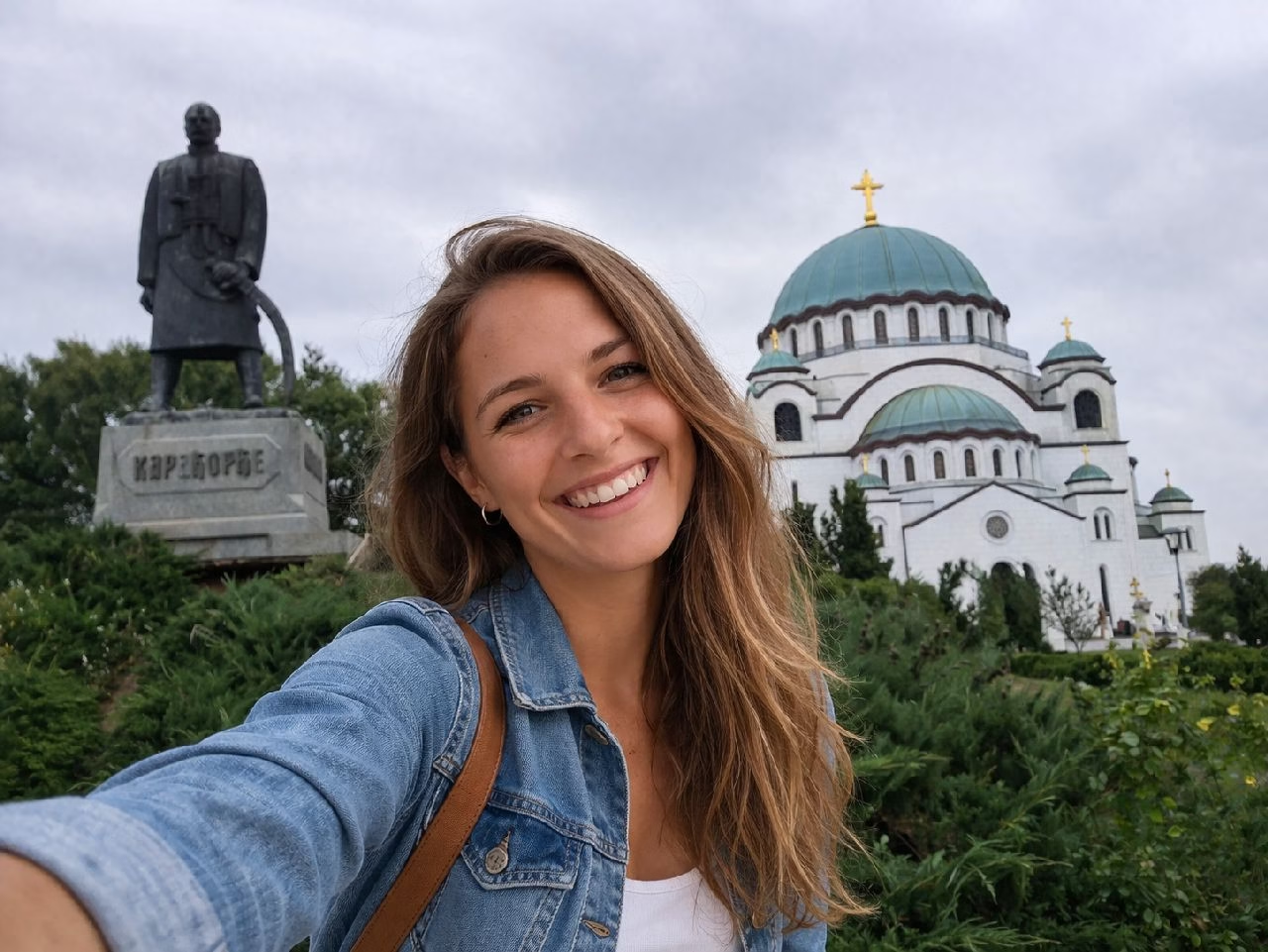
I’m Nevena, a writer and Belgrade native who now splits my time between Serbia and the UK. I’ve been living between two countries for 8 years, which means I understand Belgrade from both sides: as someone who grew up here, and as someone who had to rediscover it through expat eyes.
That dual perspective shapes everything I write. I cover expat life in Belgrade in depth, the things no guidebook tells you, like how to navigate the healthcare system, where to find reliable childcare, what property buying actually involves for foreigners, and how much things really cost when you live here rather than just visiting. I’ve done most of this myself, which means my guides are based on real experience, not research from a distance.
I also write about Serbia and the wider Balkans as a travel destination, a region that still surprises people with how much it offers. I’ve taken 35+ solo trips across Serbia, Bosnia & Herzegovina, North Macedonia, Montenegro, Croatia and Romania, and I speak Serbian, English and conversational Romanian.
Belgrade is one of Europe’s most underrated cities, and I’ve made it my mission to change that, one honest, practical guide at a time.